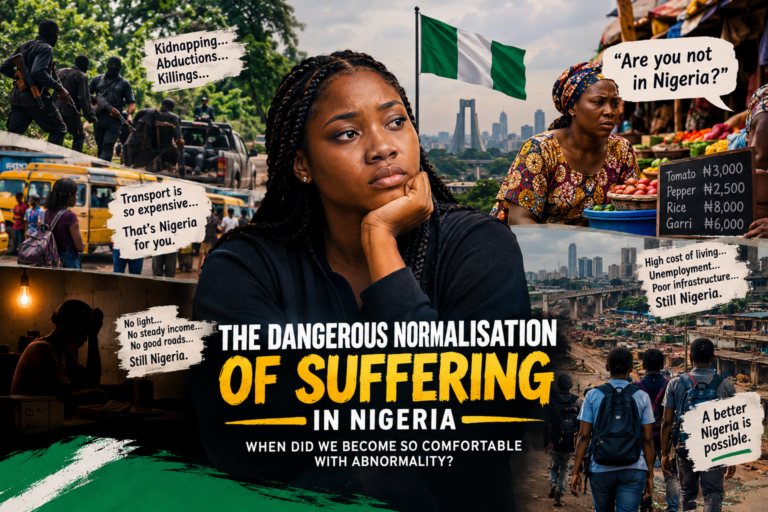
Human history contains achievements that deserve celebration and tragedies that demand permanent remembrance. The abolition of the transatlantic slave trade and the eventual legal abolition of slavery in many countries belong to both categories: they demonstrate the possibility of moral progress while reminding humanity of the extraordinary cruelty it once normalised, but a difficult question confronts the modern world: have we truly rejected the principles that made slavery possible, or have some of those principles merely assumed different forms? For centuries, millions of Africans were captured, transported across the Atlantic and forced into labour under brutal conditions. Families were separated, communities destabilised and human beings reduced to property for the economic benefit of others. The transatlantic slave trade connected European commercial interests, African political actors who participated in the capture and sale of people, and plantation economies in the Americas. Its history was complex, but its human consequences were unmistakable: suffering, exploitation and the denial of basic human dignity. Britain abolished its participation in the transatlantic slave trade through legislation passed in 1807, although illegal trafficking continued. The British Slavery Abolition Act of 1833 subsequently provided for the abolition of slavery in most British colonies, with the new system taking effect in 1834. Enslaved people were not immediately granted full freedom in practice, and the system of so-called apprenticeship delayed freedom for many until 1838. Other countries followed different timelines. Brazil, for example, abolished slavery in 1888, making it the last country in the Americas to do so. These developments were not gifts freely offered by every authority that benefited from slavery. They followed resistance by enslaved people, abolitionist campaigns, political struggles and changing economic and moral arguments. Yet the end of legal slavery did not automatically erase its consequences. Racial discrimination, unequal access to wealth, exclusion and other forms of injustice persisted in many societies. Communities that had suffered centuries of exploitation often faced additional barriers to education, land ownership, political participation and economic opportunity. Today, slavery is widely prohibited under international law. Nevertheless, forced labour, human trafficking, debt bondage, forced marriage and other forms of severe exploitation continue in different parts of the world. Modern exploitation may not always involve chains or public slave markets. It can operate through threats, deception, confiscated identity documents, unpaid wages, physical abuse or the manipulation of people who have few economic alternatives. In Nigeria, as in other countries, vulnerable people can be targeted by traffickers who promise employment, education, marriage or opportunities abroad. Some discover too late that the promised opportunity was a trap, children may be forced into dangerous labour. Workers may be denied their wages. People seeking better lives may become trapped in exploitative arrangements because they lack money, information or access to legal protection. These abuses demonstrate why the historical abolition of slavery must not be mistaken for the complete disappearance of slavery-like practices. Governments have a duty to enforce labour laws, investigate trafficking networks, protect victims and prosecute offenders. Employers must be held accountable for exploitation, while recruitment agencies and international travel intermediaries must operate transparently , citizens also need reliable information about suspicious employment offers and migration arrangements. However, the responsibility must not be shifted onto victims. People who are deceived or exploited deserve protection and justice, not humiliation or blame. Historical remembrance should also be honest. The wealth accumulated through slavery, the resistance of enslaved Africans and the long struggle for abolition deserve serious study. Remembering these events is not about assigning inherited guilt to every person alive today. It is about understanding how institutions and inequalities develop and deciding what justice requires in the present. A society cannot credibly celebrate human freedom while tolerating the exploitation of vulnerable people within its borders. Slavery may have been abolished in law, but the struggle against the exploitation of human beings is not over. The true test of civilisation is not how loudly a society celebrates freedom, but how consistently it protects the dignity of those with the least power.
Similar Posts
FBI IN NIGERIA? YAHOO BOYS HAVE BEEN CAPTURED
The question has been spreading across social media: “Is the FBI now in Nigeria?”For many young Nigerians, the question is no longer just a topic for online discussion. Recent arrests, extraditions and investigations involving Nigerian internet-fraud suspects have brought the issue much closer to home. The Federal Bureau of Investigation (FBI) is not a new…
When Ile-Ife Becomes a Living Story: Inside the Ancient Olojo Festival
There is a particular kind of anticipation that comes over Ile-Ife when Olojo draws near. It is not simply the excitement that comes with a festival, for the people of the ancient city, Olojo is a period when history, royalty, spirituality and cultural identity seem to come together in one place. This year, the atmosphere…
JUNE 12: THE DAY NIGERIA’S DEMOCRACY WAS BETRAYED
Democracy is built on a simple principle: political power belongs to the people, and the authority to govern must ultimately come from their consent. Yet history repeatedly demonstrates that the greatest threats to democracy sometimes come not from those who reject elections openly, but from those who refuse to accept the consequences of an election….
Addressing the 2026 Surge in Student Housing Rents
Nigeria’s student housing crisis has sharpened into a clear affordability emergency. National Bureau of Statistics (NBS) data for July 2026 show rent inflation surging to 33.74%, far outpacing headline inflation, which eased to 15.43%. While overall consumer prices have moderated, the cost of a roof over a student’s head continues to climb rapidly. Off-campus clusters…
THE DANGEROUS NORMALISATION OF SUFFERING IN NIGERIA: WHEN DID WE BECOME SO COMFORTABLE WITH ABNORMALITY?
There is something deeply troubling about a country where suffering has become so familiar that people no longer find it unusual. A country where kidnapping has become a recurring headline, where families constantly worry about the safety of their loved ones, and where travelling from one location to another sometimes comes with the fear of…