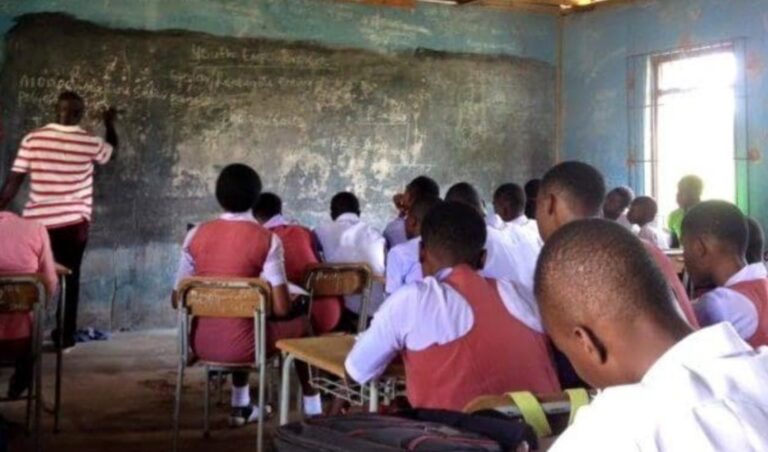
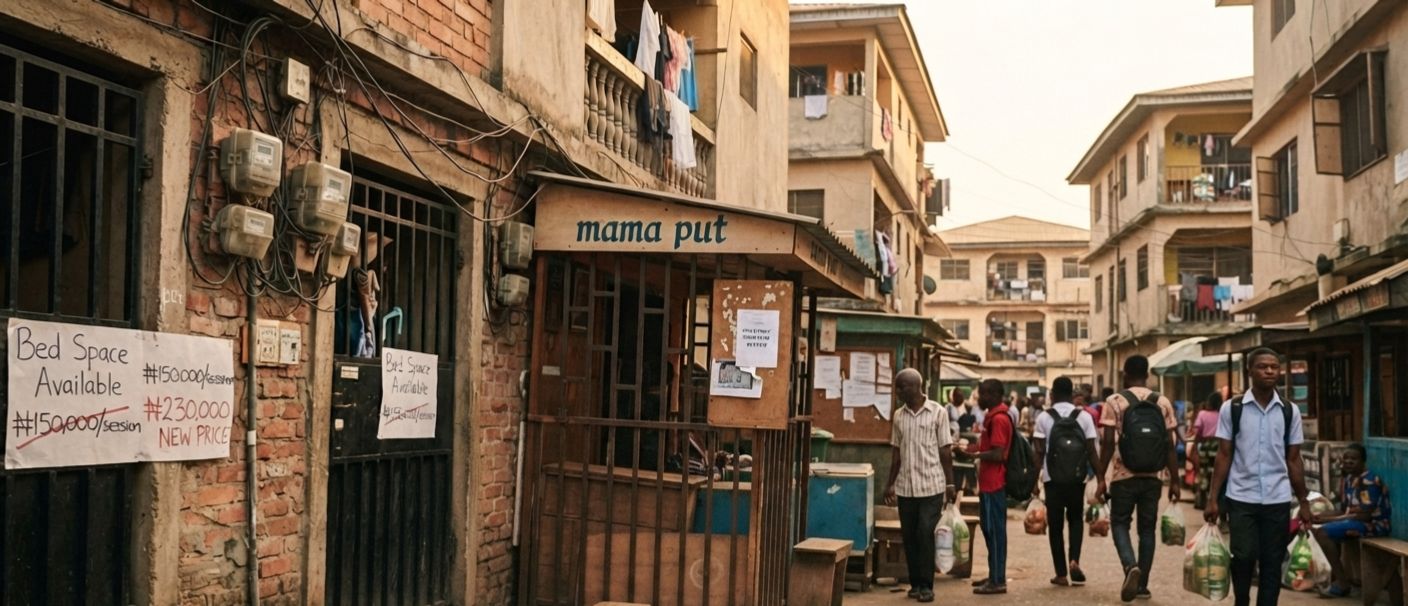
Nigeria’s student housing crisis has sharpened into a clear affordability emergency. National Bureau of Statistics (NBS) data for July 2026 show rent inflation surging to 33.74%, far outpacing headline inflation, which eased to 15.43%. While overall consumer prices have moderated, the cost of a roof over a student’s head continues to climb rapidly. Off-campus clusters around major universities are bearing the heaviest pressure.The root cause is a structural mismatch between supply and demand. On-campus hostels accommodate only a small fraction of total enrolment at most institutions, forcing the majority of undergraduates into the private market. Private developers and landlords face rising construction-material costs, high financing rates, and maintenance expenses; many respond by pushing rents higher to protect yields. The result is a financial squeeze on students whose allowances and family support have not kept pace.Resolving the problem requires structured collaboration rather than confrontation. University authorities should engage landlord associations in student-dense neighbourhoods to negotiate transparent, predictable rent frameworks and discourage arbitrary mid-session hikes that are not matched by improved facilities. At the same time, public-private partnerships must be accelerated to deliver affordable, high-density student hostels on university-owned land. Stable, accessible housing is no longer a peripheral real-estate issue; it is a basic condition for academic continuity and student welfare.
Similar Posts
EDUCATION OR BUSINESS?
Education or business? This is a question many young people ask themselves today. Some believe that going to school is the only way to become successful, while others believe that starting a business is a better path. But must we really choose one? Education is important because it gives us knowledge, skills and exposure. It…
Expectation vs. Reality on the Frontlines of Student Loans (NELFUND)
The Nigerian Education Loan Fund (NELFUND) promised a genuine shift in higher education financing: interest-free coverage of institutional fees paid directly to schools, plus monthly upkeep allowances to help students stay in class. For the 2025/2026 academic session, the Fund has delivered at scale. Billions of naira have been disbursed to institutions including the University…
WHEN MOTIVATION FADES
Motivation Is a Feeling, Discipline Is a Decision I used to think staying motivated was easy—until I had to encourage myself and find my own reasons to keep going. That was when I understood that motivation is a feeling, but discipline is a decision. The decision may be easy to make, but maintaining it isn’t…
Clean Looking Water Is Not Always Safe Water
We drink water every day. When we are thirsty, we grab a bottle or sachet of water, open it and drink. Most times, we do not stop to think about where the water came from, how it was treated, or how it was handled before it reached us. It looks clean. It is sealed. So…
The Future of Medical Education in the Light of Evolving Career Dynamics.
The roots of medical education in Nigeria can be dated back to 1930. Before the establishment of the MBBS programme, medical training was offered in Yaba Training College as a diploma course and it was run by the colonial masters- the British Colonial government. The graduates were awarded Licentiate of Medicine and Surgery (LMS) and…
WE WERE ASKED TO GET A DEGREE BUT NOBODY TOLD US THERE WOULD BE NO JOB AFTER GETTING A DEGREE
Growing up, I had one answer for everyone who asked me, “What do you want to be?” A doctor. A real medical doctor. I pictured myself in a white coat. Saving lives. Making my parents proud. But then there was mathematics. And blood. Math stood in the way like a wall I couldn’t climb. And…