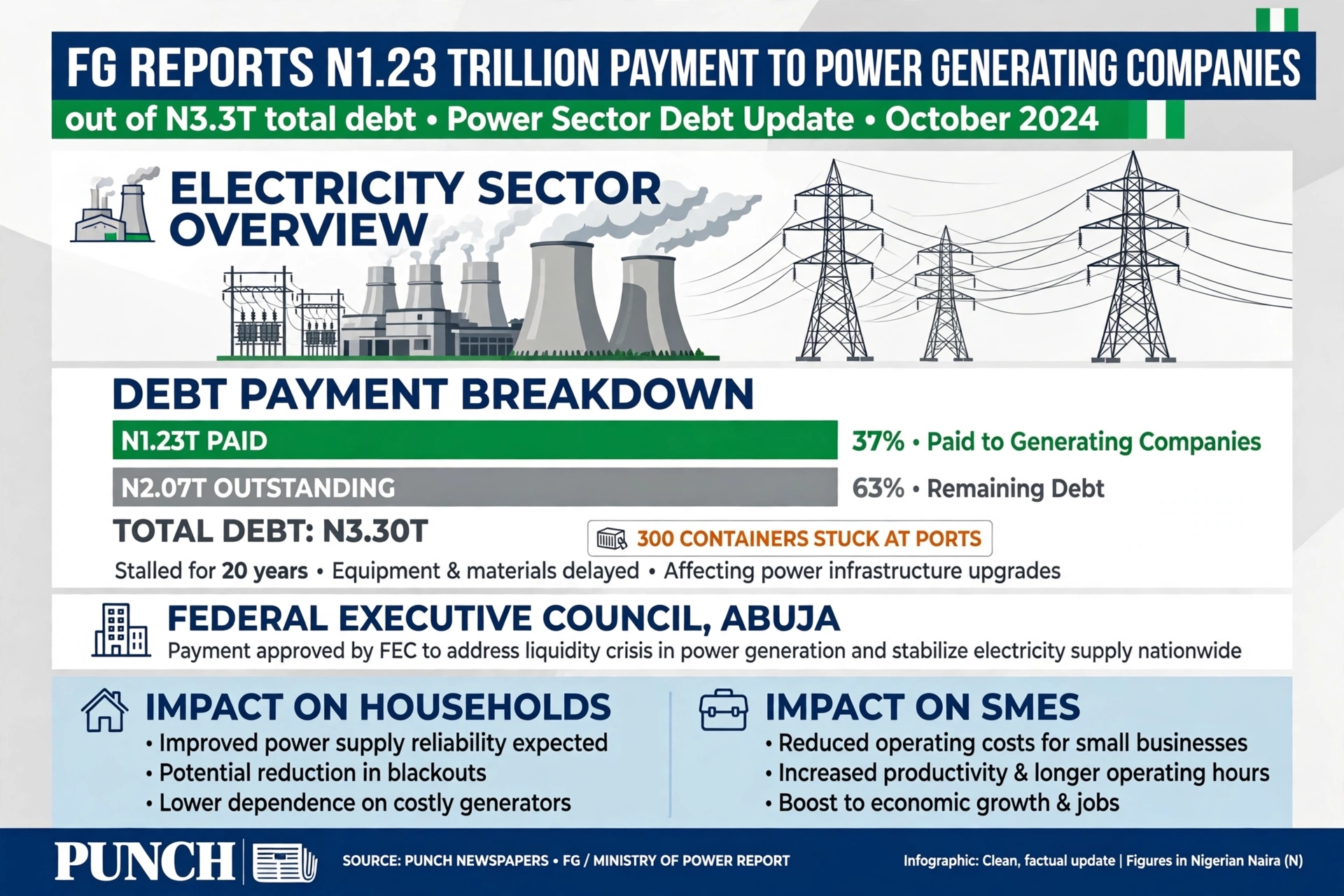
The Federal Government has reported paying ₦1.23 trillion out of approximately ₦3.3 trillion in outstanding debts owed to electricity generation companies, in a move aimed at easing financial pressures within Nigeria’s power sector. The payment was disclosed following a Federal Executive Council meeting in Abuja, according to a report published by Punch Newspapers. The report also highlighted government plans to clear approximately 300 containers of electricity-sector equipment that have reportedly remained at Nigerian ports, with some said to have been there for as long as 20 years, the developments draw attention to two longstanding problems confronting the power industry: outstanding financial obligations and delays in making essential equipment available for infrastructure projects. Electricity generation companies require funding to maintain their facilities, obtain fuel, pay workers and meet other operational expenses, when payments are delayed, companies may struggle to settle their obligations to gas suppliers and other service providers, such difficulties can affect electricity generation and the wider process through which power is transmitted and distributed to consumers. Nigeria’s electricity sector has faced recurring challenges involving inadequate generation, transmission constraints, distribution losses and unreliable supply, the government’s reported payment is therefore significant because it addresses part of the financial burden affecting the industry. However, the payment alone does not guarantee an immediate improvement in electricity supply. The reported presence of hundreds of containers containing electricity-sector equipment at Nigerian ports has also raised questions about project implementation and infrastructure management. Electricity projects depend on the timely arrival and installation of equipment, including transformers, cables, control systems and other specialised components, when such materials remain unavailable for extended periods, projects may experience delays, costs can increase and planned improvements may be postponed. Clearing the containers could help make equipment available for its intended purpose. The actual benefits, however, will depend on the condition of the materials, the projects for which they were acquired and how quickly they can be deployed. For households and businesses, the most important question is whether the reported measures will produce a more reliable electricity supply, small businesses frequently depend on generators when public electricity is unavailable. This adds to operating expenses and can increase the prices charged to customers, manufacturers also face additional costs when they must provide their own electricity to maintain production, hospitals, schools and other essential institutions are similarly affected by unreliable power. The government will therefore face pressure to demonstrate how the reported payment and equipment-clearance measures translate into measurable improvements, paying part of the outstanding debt may ease financial pressure on electricity generation companies, but sustainable progress will require improvements throughout the power sector. These include better generation capacity, stronger transmission infrastructure, more reliable distribution networks, effective maintenance and greater accountability, the reported payment represents a significant financial development, but Nigerians will ultimately judge the intervention by whether electricity becomes more reliable and affordable.
Similar Posts
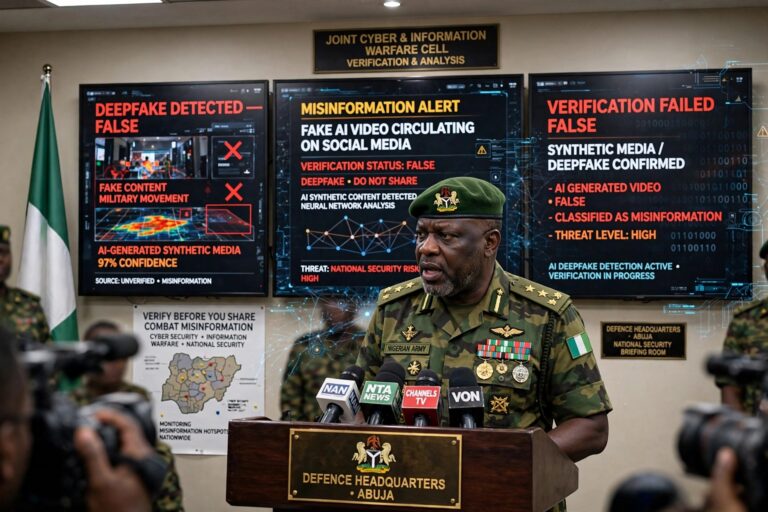
Military Chief Warns Against Fake AI Videos That Could Threaten National Security
Nigeria’s military leadership has reportedly raised concerns about the growing use of artificial intelligence to produce misleading videos that could threaten national security, spread panic and undermine public confidence in security institutions. The warning highlights a growing challenge facing governments around the world as artificial intelligence tools make it easier to generate convincing images, audio…
Dangote Begins $16bn Refinery Project in Kenya as Major Construction Work Starts
Nigerian billionaire Aliko Dangote has expanded his petroleum business beyond Nigeria following the commencement of construction on a proposed $16 billion oil refinery project in Kenya. The groundbreaking ceremony for the massive project was held in Lamu, Kenya, on Wednesday, September 30, 2026, attracting attention across Africa’s energy sector. The proposed refinery is expected to…
CBN Moves to Strengthen Bank Oversight After N4.65tn Recapitalisation
The Central Bank of Nigeria has announced plans for continued regulatory oversight of banks following the completion of the financial sector’s recapitalisation programme. The apex bank said greater attention would be placed on areas including corporate governance, asset quality, liquidity and large exposures as it continues to monitor the banking sector. The CBN disclosed that…
ONE DONOR, HUNDREDS OF CHILDREN: DUTCH SPERM DONOR CASE SPARKS FERTILITY DEBATEA
Dutch sperm donor has become the focus of an extraordinary legal case after his donations were linked to at least 550 children, raising fresh questions about donor limits and the way fertility donations are monitored.Jonathan Meijer was ordered by a court in The Hague in 2023 to stop donating sperm to new prospective parents after…
RCCG to Commission New Dialysis Centre at FMC Asaba
The Redeemed Christian Church of God (RCCG), through its Christian Social Responsibility arm, His Love Foundation, is set to commission a new dialysis centre at the Federal Medical Centre (FMC), Asaba, Delta State. The facility, named the Enoch and Folu Adeboye Dialysis Centre, is designed to expand access to specialised kidney care and strengthen the…
SOWORE CLASHES WITH CHANNELS TELEVISION PRESENTER OVER QUESTION ABOUT EKITI ATTACK
A television interview involving human rights activist and African Action Congress (AAC) presidential candidate Omoyele Sowore and Channels Television presenter Seun Okinbaloye has generated widespread reactions following a heated exchange between the two men, the confrontation occurred during an appearance on Channels Television. The disagreement reportedly centred on a question about the circumstances surrounding an…