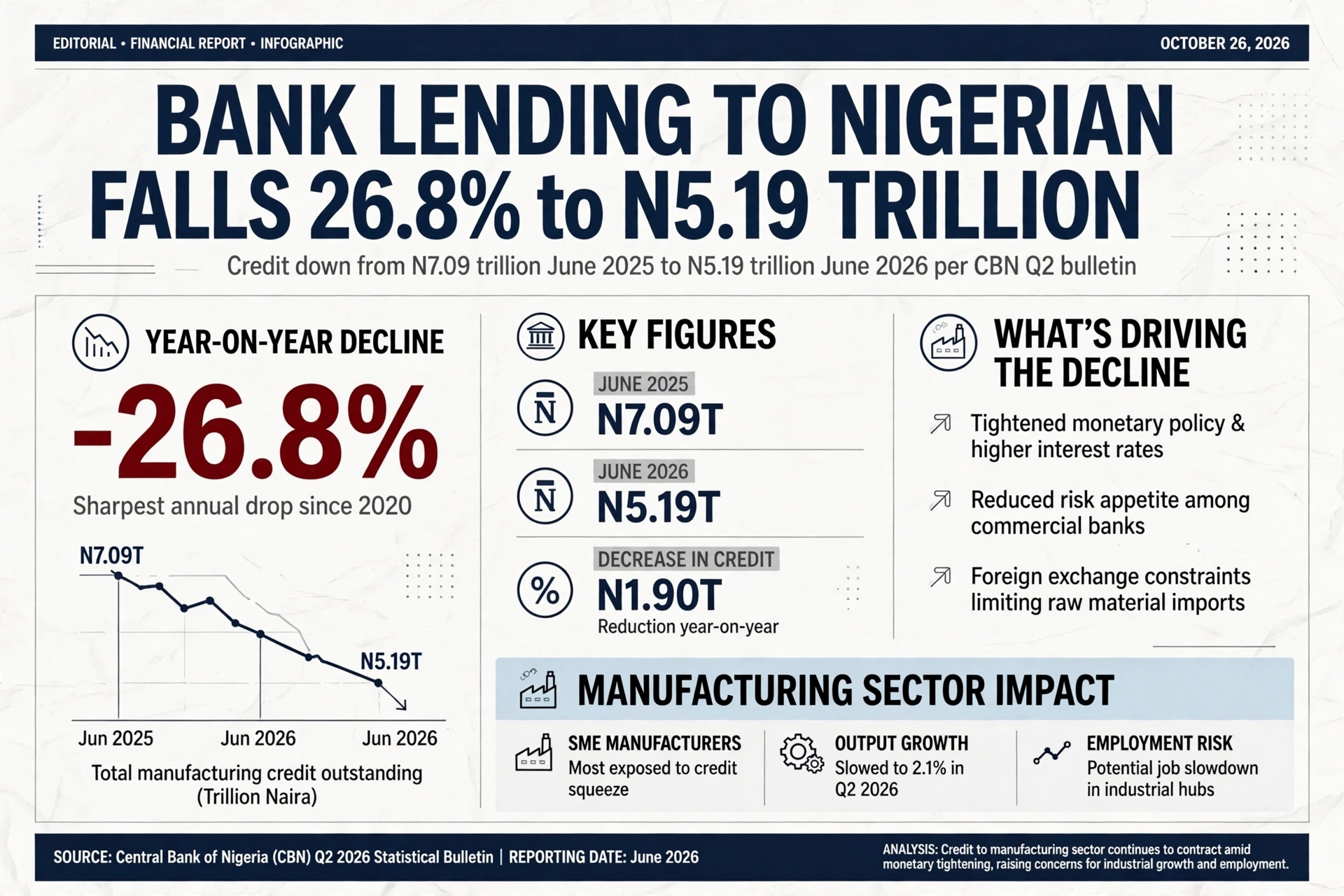
Bank credit to Nigeria’s manufacturing sector fell by 26.8 per cent year-on-year to ₦5.19 trillion in June 2026, raising concerns about access to financing for businesses seeking to expand local production. The figures were attributed to the Central Bank of Nigeria’s second-quarter statistical bulletin, Outstanding bank credit to manufacturers stood at approximately ₦7.09 trillion in June 2025 before declining to ₦5.19 trillion in June 2026. The figures highlight the financing challenges facing manufacturers amid high operating expenses and continued pressure on businesses, manufacturing companies require long-term financing to purchase machinery, maintain facilities, acquire raw materials and expand production. When credit becomes expensive or difficult to obtain, businesses may postpone investment or reduce their plans for expansion, manufacturers must also contend with electricity costs, transportation expenses, exchange-rate pressures and the cost of importing certain production inputs. These challenges can make locally produced goods more expensive and limit the ability of domestic companies to compete with imported products. The Manufacturers Association of Nigeria has reportedly called for stronger credit guarantees and the full operationalisation of a proposed ₦1 trillion Manufacturing Stabilisation Fund, credit guarantees can encourage financial institutions to lend by sharing some of the risks associated with lending to eligible businesses. Separately, the National Credit Guarantee Company reported that its guarantee arrangements had helped unlock approximately ₦46.95 billion in loans for 67,512 borrowers. However, expanding access to finance will require more than the announcement of funding programmes. Businesses must be able to access loans on terms that match their investment needs and repayment capacity, manufacturing supports employment, local supply chains and the production of goods needed by Nigerian households and businesses. A sustained reduction in access to credit could constrain investment, although the decline in outstanding loans alone does not establish whether the change resulted from reduced new lending, repayments or other changes in banks’ portfolios. Policymakers and financial institutions will therefore need to examine both the availability and affordability of financing. Improving access to suitable credit could help manufacturers invest in production, create employment and strengthen Nigeria’s industrial base.
Similar Posts
REPS THREATEN ARREST WARRANTS AGAINST TELECOM CEOs OVER POOR NETWORK SERVICES
The House of Representatives has threatened to issue arrest warrants against chief executives of telecommunications companies who fail to appear before its committee investigating persistent poor network services across Nigeria. The warning followed the rejection of a proposal by the Association of Licensed Telecommunications Operators of Nigeria to send its chairman, Gbenga Adebayo, to represent…
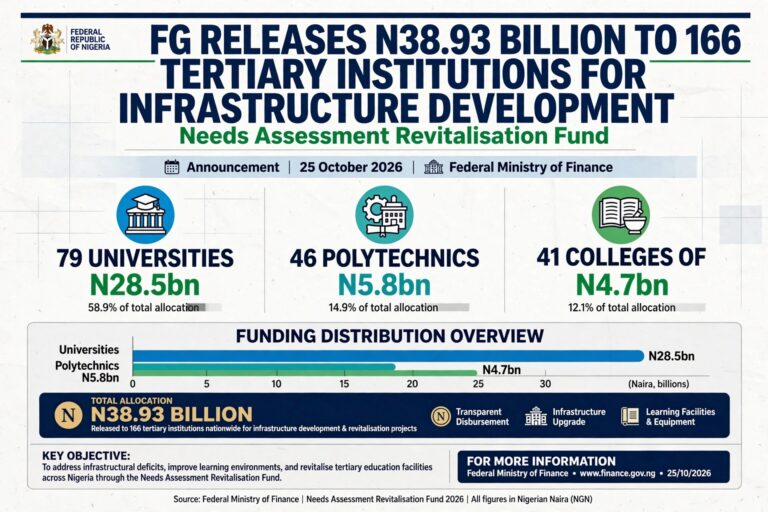
FG RELEASES ₦38.93 BILLION TO 166 TERTIARY INSTITUTIONS FOR INFRASTRUCTURE DEVELOPMENT
The Federal Government has disbursed ₦38.93 billion to 166 public tertiary institutions across Nigeria under the Needs Assessment Revitalisation Fund. The funding is intended to address infrastructure gaps and improve teaching and learning facilities in universities, polytechnics and colleges of education, the Federal Ministry of Finance announced the disbursement in a statement dated October 25,…
2027: NRM Unveils 38-Member Presidential Campaign Council and Six-Pillar Agenda
The National Rescue Movement, NRM, has inaugurated a 38-member Presidential Campaign Council ahead of Nigeria’s 2027 general elections and unveiled a six-pillar policy agenda for its campaign. The council was inaugurated in Abuja by the party’s National Chairman, Prince Chinedu Obi. Muhammad Garba was named Director-General of the Presidential Campaign Council. The party’s presidential candidate,…
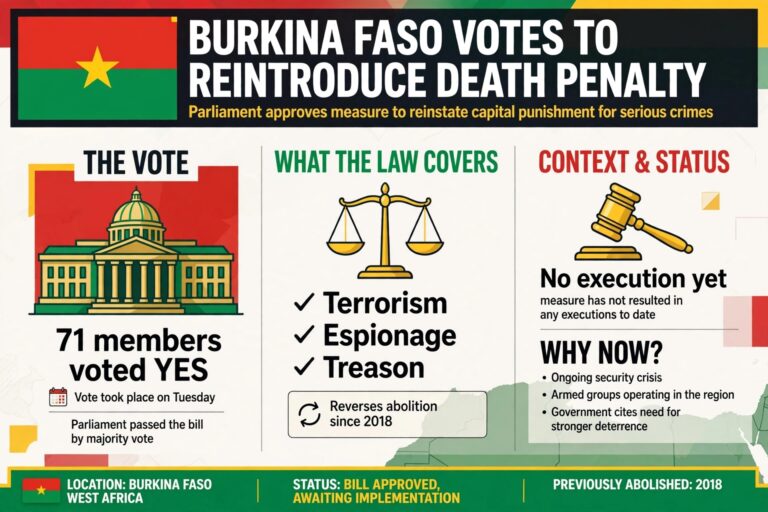
BURKINA FASO VOTES TO REINTRODUCE DEATH PENALTY FOR SERIOUS CRIMES
Burkina Faso’s parliament has voted to reinstate the death penalty for certain serious offences, including terrorism, espionage and treason, in a development that has drawn international attention to the country’s criminal justice system. The decision marks a major change in the country’s approach to capital punishment and comes as Burkina Faso continues to face a…
NAF ATR-42 Crash in Ondo: 25 People Confirmed Dead as Aircraft Goes Down in Igbokoda
The Nigerian Air Force (NAF) has confirmed the crash of one of its ATR-42 aircraft in Igbokoda, Ilaje Local Government Area of Ondo State, with all 25 people on board confirmed dead.The aircraft, identified as NAF 931, was reportedly carrying out a routine mission from Benin, Edo State, to Lagos when it crashed on Monday,…
Army Rescues Six Kidnapped Victims in Benue
Troops of the Joint Task Force, Operation Whirl Stroke, have rescued six kidnapped victims in Katsina-Ala Local Government Area of Benue State. The victims were rescued around Gbise community on September 25 after troops reportedly received credible information about their release while conducting patrols in the area. The Acting Media Information Officer of the task…