The Federal Government has flagged over 258,000 illegal admissions across Nigerian universities and colleges of education, with the figure potentially higher in universities.Minister of Education, Dr Tunji Alausa, disclosed this on Wednesday, September 9, 2026, in Abuja while inaugurating the Ministerial Committee on Strengthening the Accreditation and Quality Assurance System for Tertiary Institutions.The committee is chaired by former Joint Admissions and Matriculation Board (JAMB) Registrar, Professor Is-haq Oloyede.Alausa said about 58,000 students were found to have been illegally admitted into colleges of education, while universities had not less than 200,000 such admissions, a figure he indicated could be higher.According to the minister, the Federal Government had initially expected to address about 5,600 cases involving illegally admitted students in colleges of education through a one-off amnesty. However, verification uncovered 58,000 affected candidates nationwide.Alausa described the situation as a “shame” and said the government would no longer legitimise illegal admission practices through repeated amnesties or condonement.He cited one institution where 8,593 students were legally admitted, while 9,872 were admitted illegally, meaning the number of illegal admissions exceeded the number of legitimate admissions.The minister linked the problem to institutions exceeding approved admission capacities and admitting students into programmes beyond their approved limits. He also warned that the consequences extend to the labour market, where employers face difficulties finding qualified graduates despite receiving large numbers of applications.As part of the government’s response, Alausa said accreditation would be strengthened through a digital and data-driven system capable of continuously verifying academic and non-academic staff, facilities and equipment.He warned institutions against presenting borrowed staff or equipment during accreditation exercises, saying officials who fail to comply with the new standards could lose their jobs, while private institutions could face withdrawal of their licences.Alausa directed the committee to develop mechanisms for verifying the authenticity and continuous availability of academic and non-academic staff, as well as the ownership and functionality of facilities and equipment.He also advocated the use of geospatial mapping and digital identification of critical equipment, alongside collaboration with national identity systems to prevent individuals from maintaining multiple institutional affiliations.The committee is expected to transform Nigeria’s accreditation system from a largely manual, periodic exercise into a continuous and verifiable process.

Similar Posts
EBSU 2026/2027 Admission: Process, Cut-off Mark, and How To Check Your Status
Ebonyi State University, EBSU, has officially begun releasing admission for the 2026/2027 academic session. Thousands of UTME and Direct Entry candidates who sat for the online Post UTME screening are now checking JAMB CAPS and the EBSU portal daily.If you applied to EBSU this year, here’s everything you need to know about the process, cut-off…
JAMB Activates 2026 UTME Original Result Slip Portal: Candidates Urged to Print Before Post-UTME Begins
The Joint Admissions and Matriculation Board (JAMB) has officially activated the portal for the printing of the 2026 Unified Tertiary Matriculation Examination (UTME) Original Result Slip, providing candidates with access to one of the most important documents required during the admission process. The development comes as universities, polytechnics, and colleges of education across Nigeria prepare…
You No Longer Need JAMB to Study Education or Agriculture in Nigeria But Read This First
If you want to become a teacher or study certain agriculture-related courses in Nigeria, you may no longer need to sit for the JAMB UTME. The announcement was made by the Minister of Education, Tunji Alausa, during the 2026 JAMB Policy Meeting held on May 11. However, many candidates are already misunderstanding what the policy…
2026 Official JAMB Cut-Off Marks for All Nigerian Universities
The long wait is over. The Joint Admissions and Matriculation Board held its 2026 Policy Meeting on Admissions in Abuja and fixed 150 as the official minimum baseline for university admissions. If you scored up to 150, you have cleared the first hurdle, but this does not mean automatic admission into any course or school….
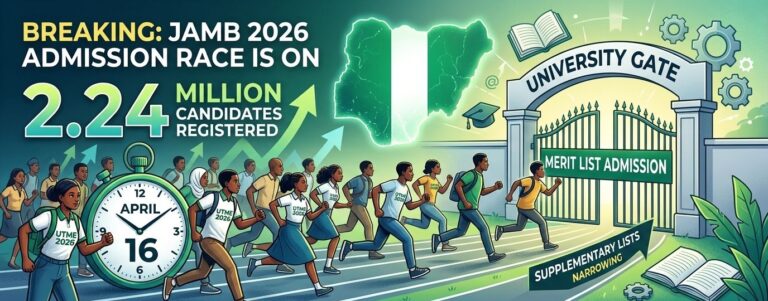
2.24 Million UTME Candidates: 3 Keys to Surviving the 2026 Admission “Crowd”
The 2026 JAMB registration has officially closed with 2,243,816 candidates—a record-breaking number that has many students worried. If you are one of them, you aren’t searching for the number; you’re searching for how to beat it. Here is what you need to do to stay ahead of the competition: 1. The “Aggregated” Strategy (The Real…
UNIZIK 2026/2027 Admission List Out: How To Check Status & Next Steps
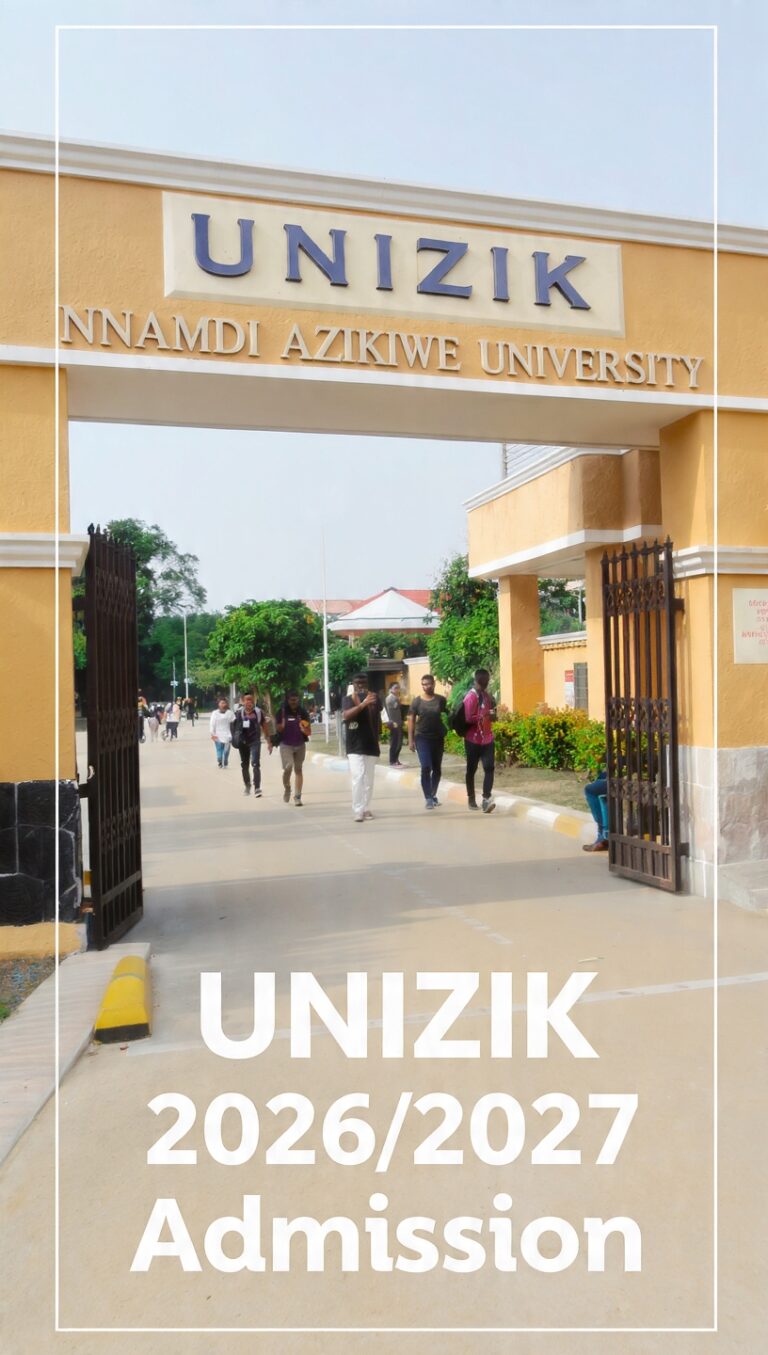
Nnamdi Azikiwe University, UNIZIK, has joined the list of Nigerian universities releasing admission for the 2026/2027 academic session. Candidates who chose UNIZIK as their first choice and participated in the Post UTME screening can now check their admission status on both JAMB CAPS and the UNIZIK portal.UNIZIK has started uploading admission offers in batches. This…