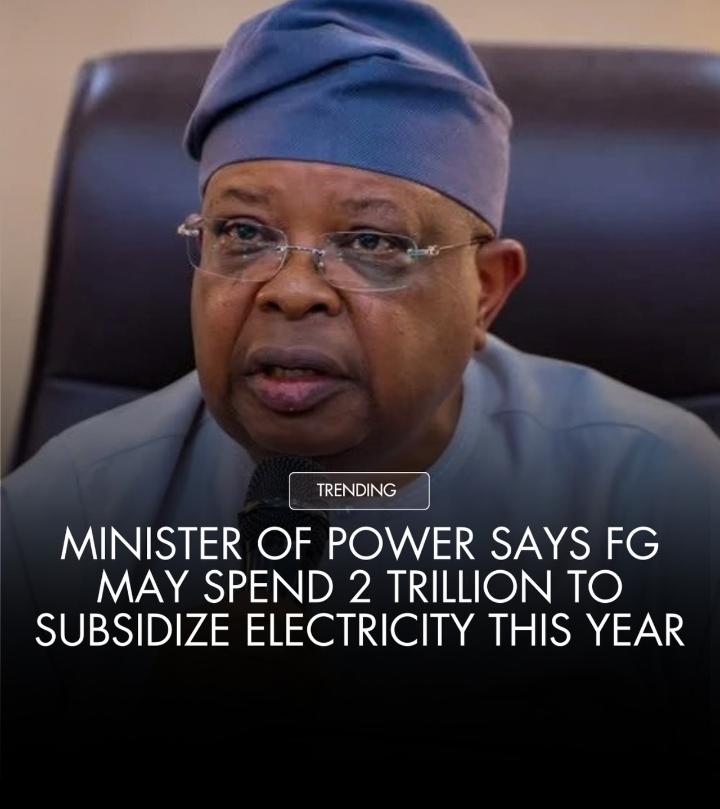
The Federal Government may face an electricity subsidy bill of about ₦2 trillion in 2026 as it maintains that there are no immediate plans to increase electricity tariffs, amid continuing financial pressures across Nigeria’s power sector. The development follows comments by the Minister of Power, Joseph Olasunkanmi Tegbe, who reiterated the government’s position during a media parley in Abuja while marking his first 100 days in office. Tegbe said the government was not considering an immediate increase in electricity tariffs, stressing that its focus was on improving power supply and protecting vulnerable consumers. “There are no immediate plans to increase electricity tariffs. Our goal is to build a commercially viable power sector while protecting vulnerable consumers.” The minister’s position comes against the backdrop of the substantial subsidy burden recorded in the previous year. According to the Nigerian Electricity Regulatory Commission (NERC), the Federal Government incurred an electricity subsidy obligation of approximately ₦1.93 trillion in 2025. The amount represented 57.44 per cent of the total Nigerian Bulk Electricity Trading (NBET) invoice for the year and averaged about ₦160.69 billion every month. The electricity subsidy exists because approved electricity tariffs remain below the cost of supplying power. Under the existing arrangement, the difference between the cost-reflective tariff and the amount consumers are allowed to pay is covered through government subsidy. NERC explained that the subsidy mechanism is intended to prevent unpaid obligations from piling up on the balance sheets of electricity distribution companies and further weakening their ability to finance critical investments. With the Federal Government maintaining the current tariff structure and ruling out an immediate tariff increase, the subsidy burden could approach the ₦2 trillion mark again in 2026. However, the ₦2 trillion figure should be understood as a potential or projected burden, rather than money already confirmed as spent by the government this year. Tegbe’s comments also come at a time when Nigeria’s electricity industry continues to grapple with challenges across generation, transmission and distribution. The minister identified issues including inadequate gas supply, ageing generating infrastructure, vandalised transmission facilities and financial difficulties across the electricity value chain. He said the government was working to address these problems while improving revenue collection, metering and overall service delivery. The government has also placed emphasis on expanding electricity metering so that consumers can be billed more accurately and reduce dependence on estimated billing. Earlier in September, Tegbe reiterated that the government’s immediate priority was improving electricity supply, expanding reliable access and accelerating universal metering rather than imposing another tariff increase. For electricity consumers, the government’s decision not to immediately raise tariffs means there is no announced immediate tariff hike to add to household and business expenses. However, the subsidy does not eliminate the underlying cost of generating and supplying electricity. Instead, the government continues to absorb the difference between what electricity costs to supply and what consumers are permitted to pay under the applicable tariff structure. The challenge for the Federal Government is therefore how to protect consumers from sudden increases while also ensuring that electricity companies have enough revenue to maintain infrastructure, pay suppliers and invest in improved service delivery. As Nigeria continues its power-sector reforms, the size of the electricity subsidy remains a major financial issue, with the government now facing the difficult task of balancing affordability, reliable electricity supply and the long-term financial sustainability of the sector. For now, the Federal Government says Nigerians should not expect an immediate electricity tariff increase, even as the cost of maintaining the existing tariff structure could push the 2026 subsidy burden towards ₦2 trillion.
Similar Posts
INTERNATIONAL EFFORTS CONTINUE TO SEEK HUMANITARIAN RELIEF FOR SUDAN
Diplomatic efforts to address Sudan’s continuing conflict have highlighted the urgent need for humanitarian assistance and measures to protect civilians. The conflict has created serious challenges for communities affected by violence, displacement and disruptions to essential services, international discussions have focused on ways to improve humanitarian access and create conditions that could reduce the immediate…
AHEAD OF ELECTIONS, NIGERIAN GOVERNMENT TO GIFT STUDENTS 100MB DATA DAILY FROM OCTOBER 1
The President Bola Tinubu-led Nigerian government has announced that Nigerian students will begin receiving 100 megabytes (MB) of free daily data from October 1, 2026, to access approved educational websites and digital learning platforms. The initiative, being implemented by the Nigerian Communications Commission (NCC) in partnership with telecommunications operators and the Federal Ministry of Education,…
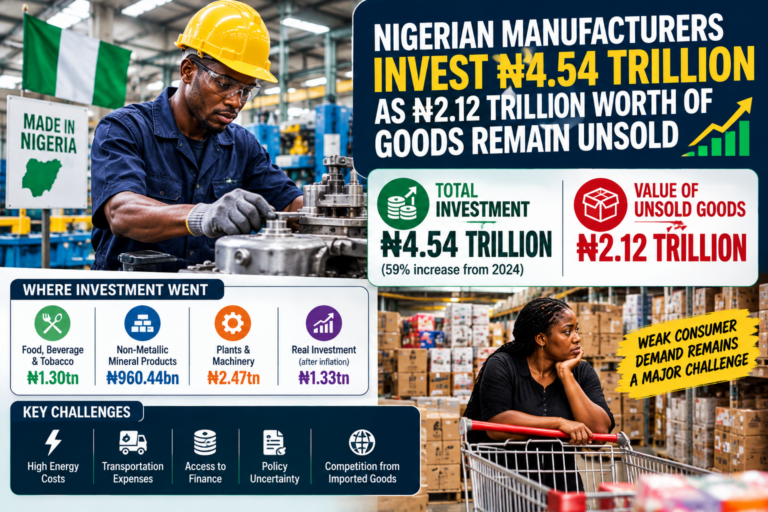
NIGERIAN MANUFACTURERS INVEST ₦4.54 TRILLION AS ₦2.12 TRILLION WORTH OF GOODS REMAIN UNSOLD
Nigerian manufacturers invested about ₦4.54 trillion in 2025, even as products worth approximately ₦2.12 trillion reportedly remained unsold. The figures present a mixed picture of Nigeria’s manufacturing sector. On one side, manufacturers significantly increased their investment in production facilities, machinery and other assets. On the other, weak consumer purchasing power made it difficult for some…
Tension in Imo as Reports of NYSC Prospective Corps Members’ Abduction Spark Panic
Tension has gripped families and prospective National Youth Service Corps members following reports that travellers heading towards NYSC orientation camps were allegedly abducted in Imo State. The reports emerged on Thursday, October 1, 2026, as Nigerians marked the country’s 66th Independence Anniversary, with social media users sharing claims that buses conveying prospective corps members had…
TINUBU DEFENDS FRESH FOREIGN LOANS, SAYS BORROWING IS NECESSARY TO BUILD $1 TRILLION ECONOMY
President Bola Ahmed Tinubu has defended his administration’s plans to secure additional foreign loans, arguing that long-term infrastructure investments are necessary to achieve Nigeria’s ambition of becoming a $1 trillion economy by 2030. The President maintained that borrowing should not be judged solely by the amount involved but by the economic value of the projects…
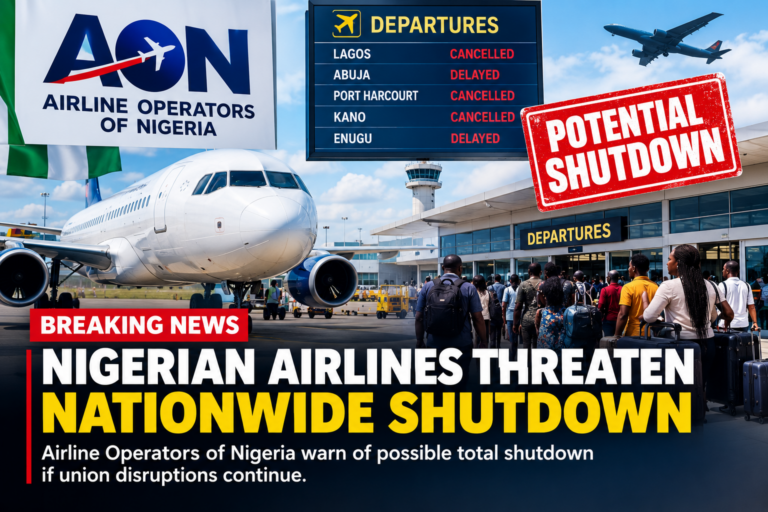
Nigerian Airlines Threaten Nationwide Shutdown Over Future Union Disruptions
Domestic airlines operating under the Airline Operators of Nigeria have warned that they could shut down their operations nationwide if aviation unions again disrupt the operations of any member airline. The warning follows the disruption of airline activities during an industrial action at airports in Lagos and Abuja on August 11. The Airline Operators of…