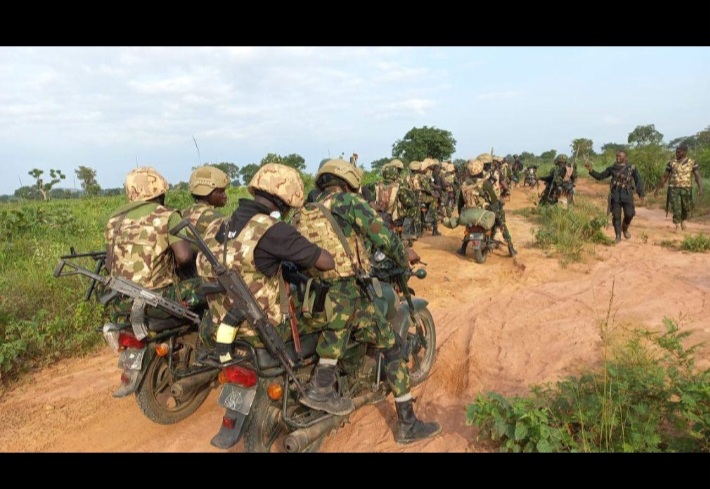
Nigeria’s military says coordinated air operations conducted between October 10 and 18 targeted Islamic State West Africa Province positions in parts of Borno and Adamawa states, with the operation reportedly destroying logistics facilities and killing dozens of fighters. The military has reported that 103 suspected fighters of the Islamic State West Africa Province were killed during seven air strikes carried out across parts of Nigeria’s North-East between October 10 and 18, the operations reportedly targeted terrorist positions, logistics hubs and storage facilities as part of ongoing efforts to weaken insurgent networks in the region, the figures were disclosed by Captain Mohammed Goni, Acting Military Information Officer at the Headquarters of the Joint Task Force, Operation Hadin Kai. According to the military statement, the operations involved coordinated assets from Nigerian Army Aviation, the Nigerian Army Remotely Piloted Aircraft Regiment and the Air Component. The reported targets included locations around Gudumbali in Guzamala Local Government Area, Badu and Mairari in Monguno Local Government Area of Borno State, as well as Duste Uku in Gombi Local Government Area of Adamawa State, the operations took place over several days rather than during a single air strike. The military said the strikes were intended to disrupt insurgent movements, damage operational infrastructure and reduce the ability of the group to sustain activities in the affected areas. One of the reported operations took place on October 18 in the Arina Woje area of Monguno Local Government Area, Borno State. According to the military, an air strike targeted an alternative residence associated with Abu Saleem, whom the statement described as the ISWAP Wali of South Lake Chad. The military said intelligence, surveillance and reconnaissance activities preceded the operation. It subsequently reported that intelligence gathered after the strike confirmed the deaths of Jindullah, described as a prominent fighter and security guard to Abu Saleem, and Abul Kissa, identified as a member of the group’s Shura Council. These details form part of the military’s operational account. Independent confirmation of the reported deaths was not established in the available reports, the military also said the October 18 strike destroyed the targeted structure and damaged logistics assets stored at the location. According to its statement, the assets included nine boat engines and several motorcycles, such equipment can be important to armed groups operating around waterways, remote settlements and forested areas, destroying transport and storage facilities may complicate the movement of personnel and supplies, although the wider operational impact cannot be fully assessed from the announcement alone. The military said the strikes were intended to weaken insurgent command structures and deny fighters safe locations from which to coordinate activities. Insurgency has remained a major security challenge in parts of Nigeria’s North-East, particularly Borno State. Military operations in the region have included ground offensives, air strikes, intelligence gathering and efforts to disrupt the supply networks used by armed groups, the effectiveness of these operations depends not only on reported battlefield results but also on the ability to protect communities, maintain security in recovered areas and prevent insurgents from returning. Civilians in affected communities continue to face risks associated with armed violence, displacement and disruptions to farming, trade and access to essential services. The military’s latest announcement highlights its continued efforts to target insurgent positions and logistics infrastructure. However, operational figures released by security agencies should be understood in their proper context. They represent the military’s account of events and do not automatically establish the full independent assessment of casualties or the wider impact on the conflict, sustained improvements in security will require effective operations alongside community protection, humanitarian assistance and efforts to restore normal economic activity in affected areas. For residents of the North-East, the ultimate measure of success will be a lasting reduction in violence and the ability to live, work and travel without fear.
Similar Posts
ONLY FIVE STATE ASSEMBLIES REPORTED TO HAVE APPROVED STATE POLICE PROPOSAL AS DEBATE CONTINUES
The proposed establishment of state police in Nigeria has encountered a legislative challenge, with reports indicating that only five State Houses of Assembly had approved the relevant constitutional amendment by the reported October 15 deadline. The development has renewed debate over whether Nigeria should decentralise its policing structure to allow states to establish their own…
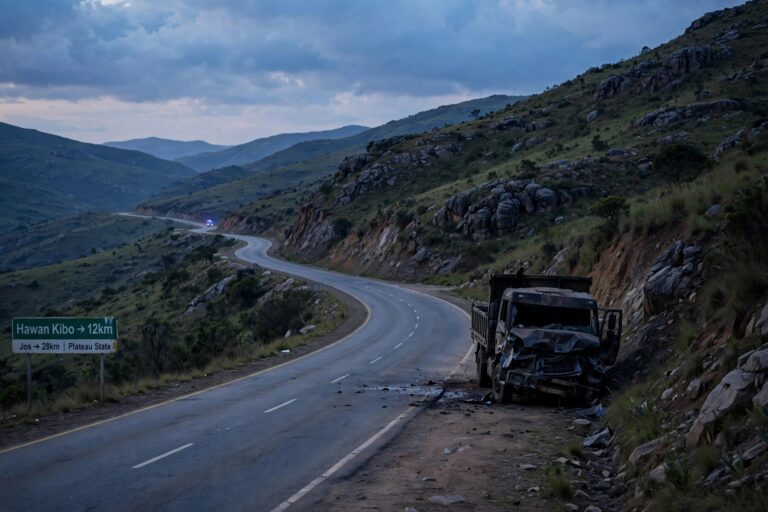
TRAGEDY ON PLATEAU ROAD: 20 KILLED IN HORRIFIC MULTI-VEHICLE CRASH
At least 20 people have been killed in a fatal multiple-vehicle crash along the Hawan Kibo–Jos route in Plateau State. The accident, which occurred on Friday, involved four vehicles and has once again raised concerns over road safety and the dangers faced by motorists travelling along major highways in the country. According to the Federal…
Osun on Alert as DSS Warns of Alleged Terror Plot Targeting Worship Centres
Osun State has been placed on heightened security alert following a warning from the Department of State Services (DSS) over an alleged plan by terrorists to attack places of worship and other crowded locations in the state. The warning has sparked increased security awareness among religious communities, with Christian and Muslim leaders urged to take…
Petrol Hits About ₦1,400 in Lagos and Abuja as Fuel Price Pressure Returns
Nigerians are facing renewed pressure at the pump as petrol prices rise to around ₦1,400 per litre in Lagos and Abuja, with some stations in northern parts of the country reportedly selling at as much as ₦1,500 per litre. The latest increase has also pushed diesel prices above ₦2,000 per litre in some locations. According…
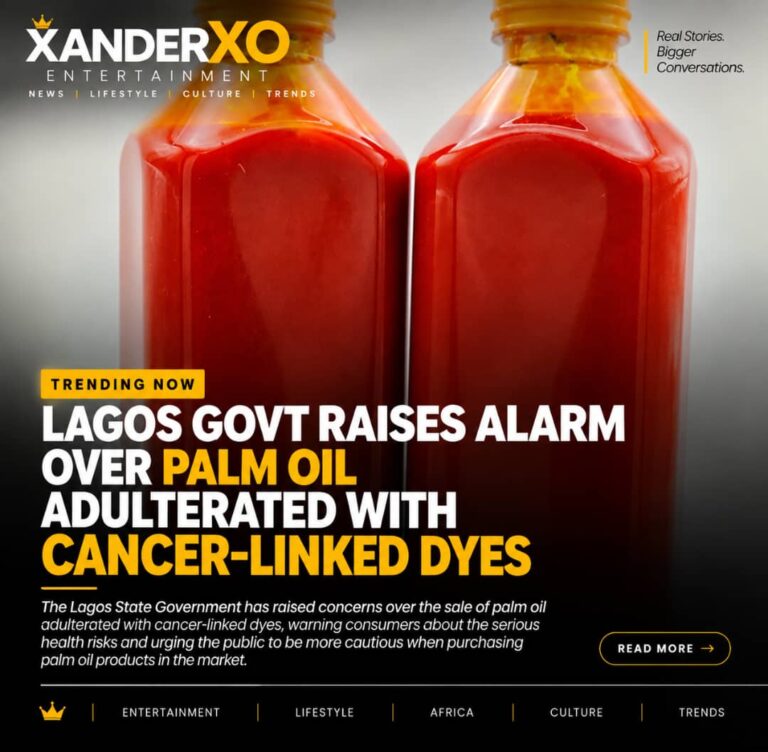
LAGOS GOVT RAISES ALARM OVER PALM OIL ADULTERATED WITH CANCER-LINKED DYES
The Lagos State Government has raised concerns over increasingly sophisticated adulteration of palm oil in markets across the state, urging residents to be more vigilant about the products they purchase.The warning was issued through the Lagos State Consumer Protection Agency (LASCOPA) following a technical presentation at the 2026 Lagos State Food Safety Conference and Exhibition….
NIGERIAN MANUFACTURERS INVEST ₦4.54 TRILLION AS ₦2.12 TRILLION WORTH OF GOODS REMAIN UNSOLD
Nigerian manufacturers invested about ₦4.54 trillion in 2025, even as products worth approximately ₦2.12 trillion reportedly remained unsold. The figures present a mixed picture of Nigeria’s manufacturing sector. On one side, manufacturers significantly increased their investment in production facilities, machinery and other assets. On the other, weak consumer purchasing power made it difficult for some…