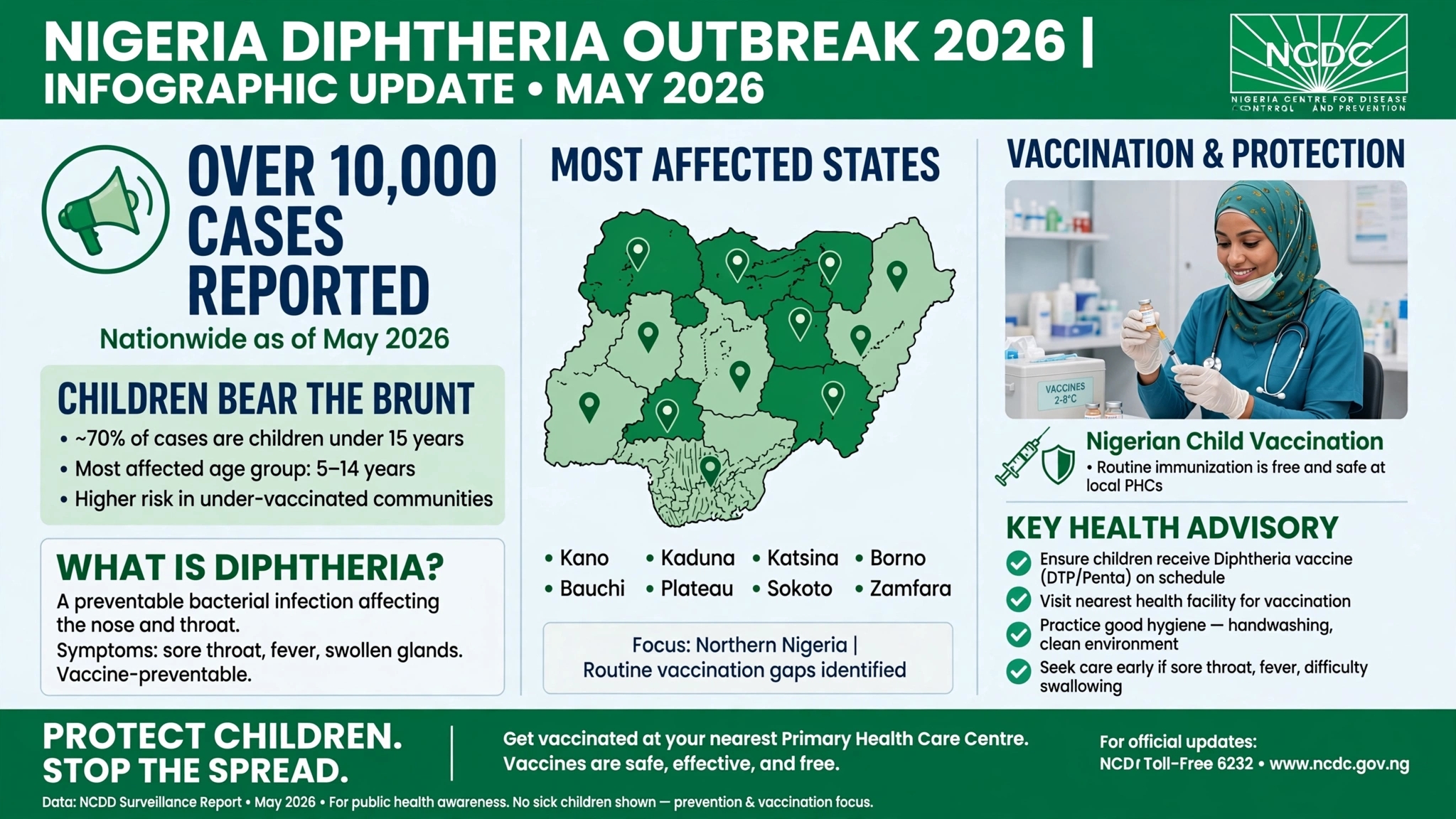
Nigeria has recorded more than 10,000 confirmed cases of diphtheria in 2026, with children aged between one and 14 years bearing the heaviest burden of the disease, according to a new health advisory. The Academy of Medical Sciences raised the alarm in an advisory dated September 17 and published in reports on Sunday, warning that the outbreak remains a significant public health concern. According to the Academy, eight states, Kano, Kaduna, Katsina, Borno, Bauchi, Plateau, Sokoto and Zamfara account for 98 per cent of the confirmed cases recorded nationwide. The Academy said the vast majority of those affected are unvaccinated, while low immunity in some communities, overcrowded environments and close contact are contributing to the continued transmission of the disease. Diphtheria is a vaccine-preventable bacterial infection that can affect the throat and upper respiratory system. It can spread through respiratory droplets and close contact with infected people. The latest warning has placed renewed attention on children who have either not received their routine vaccinations or have missed some doses. The Academy warned that areas with low vaccination coverage remain vulnerable and that movement between states could allow the disease to spread beyond the areas currently carrying the greatest burden. Nigeria’s NCDC data had already recorded 10,320 confirmed diphtheria cases and 368 deaths by epidemiological Week 30 of 2026, giving a case-fatality rate of 2.9 per cent at that point. The Academy cautioned that the situation could put additional pressure on healthcare facilities, particularly if patients arrive late for treatment. It identified delayed clinical care, gaps in vaccination, limited laboratory confirmation and transmission in crowded communities among factors that could worsen the outbreak. The experts urged affected states to intensify vaccination campaigns, strengthen disease surveillance and ensure that suspected cases are identified and treated promptly. They also called for stronger infection-prevention measures in high-risk environments, including schools, boarding facilities, religious communities, camps and densely populated settlements. The Academy advised health authorities to prioritise children and other under-immunised groups, identify communities with low vaccination coverage and address missed opportunities for routine immunisation. It also warned against misinformation surrounding vaccines and urged authorities to provide accurate health information in local languages. The NCDC has similarly stressed the importance of improving vaccination coverage, particularly among children who remain unvaccinated or have received incomplete doses. Reactive vaccination is ongoing in affected areas, while treatment and laboratory supplies are being provided. With more than 10,000 confirmed cases already recorded this year, health authorities are being urged to maintain surveillance and accelerate vaccination efforts to prevent further spread of the disease across Nigeria.
Similar Posts
Nigeria, Italy Partner on $5bn Global Education Funding Campaign
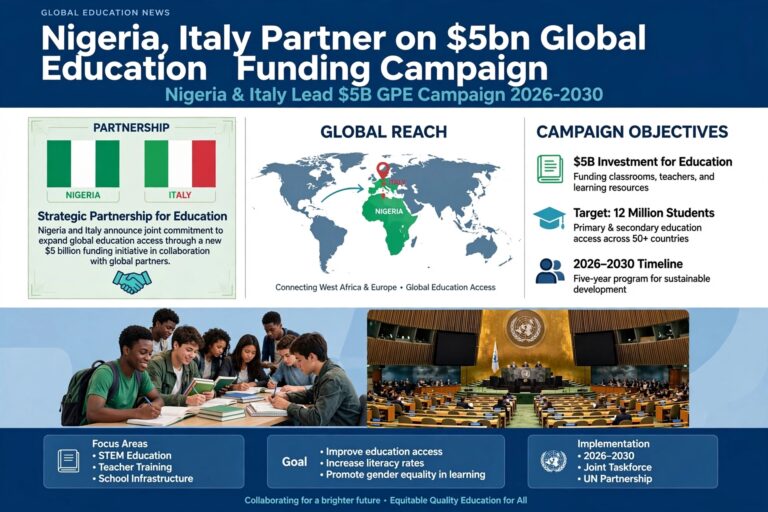
Nigeria and Italy have joined forces in a global campaign seeking to mobilise $5 billion for education programmes across more than 100 low-income and lower-middle-income countries. The initiative was discussed during a high-level education financing event held in New York on the sidelines of the 81st United Nations General Assembly. Nigeria is co-hosting the 2026–2030…
NIGERIA SEEKS STRONGER GLOBAL SUPPORT AGAINST TERRORISM AND BANDITRY
Nigeria is seeking stronger international cooperation to tackle terrorism, banditry, kidnapping and other security threats affecting the country. Minister of Defence Christopher Musa has called for greater cooperation between Nigeria and international partners as the government continues its efforts to improve national security. The minister made the call during engagements connected to the 81st United…
Two Giant Pandas Arrive in Atlanta for 10-Year Conservation Partnership
Two giant pandas have arrived in Atlanta, Georgia, beginning a new 10-year chapter in the long-running conservation relationship between China and the United States. The pandas, Ping Ping and Fu Shuang, arrived in Atlanta on Sunday as part of an international conservation agreement that will see them reside at Zoo Atlanta. Their arrival has attracted…
NIGERIA’S MOBILE SUBSCRIPTIONS RISE ABOVE 195 MILLION
Nigeria’s telecommunications sector has recorded further growth, with active mobile subscriptions rising to about 195 million in July 2026. The increase highlights the growing importance of mobile communication and internet services to Nigerians.Mobile phones have become an essential part of daily life, with Nigerians increasingly relying on them for banking, business, education, entertainment, communication and…
Peter Obi’s Wife’s ₦200m+ Hermès Bag Sparks Outrage: Nigerians Begin Asking Questions
A luxury handbag reportedly carried by Margaret Obi, wife of Labour Party presidential figure Peter Obi, has suddenly become the centre of a heated online debate, with Nigerians questioning the price of the designer item and what it means for Peter Obi’s carefully cultivated image of frugality. Photos and videos of Margaret Obi carrying what…
Nigeria Begins 66th Independence Anniversary Activities With Public Lecture
Nigeria is set to mark its 66th Independence Anniversary with a series of activities beginning with an Independence Day Public Lecture on Wednesday, September 30. The Federal Government has announced a relatively low-key programme for this year’s anniversary as the country prepares to commemorate 66 years since gaining independence from British colonial rule. Nigeria became…