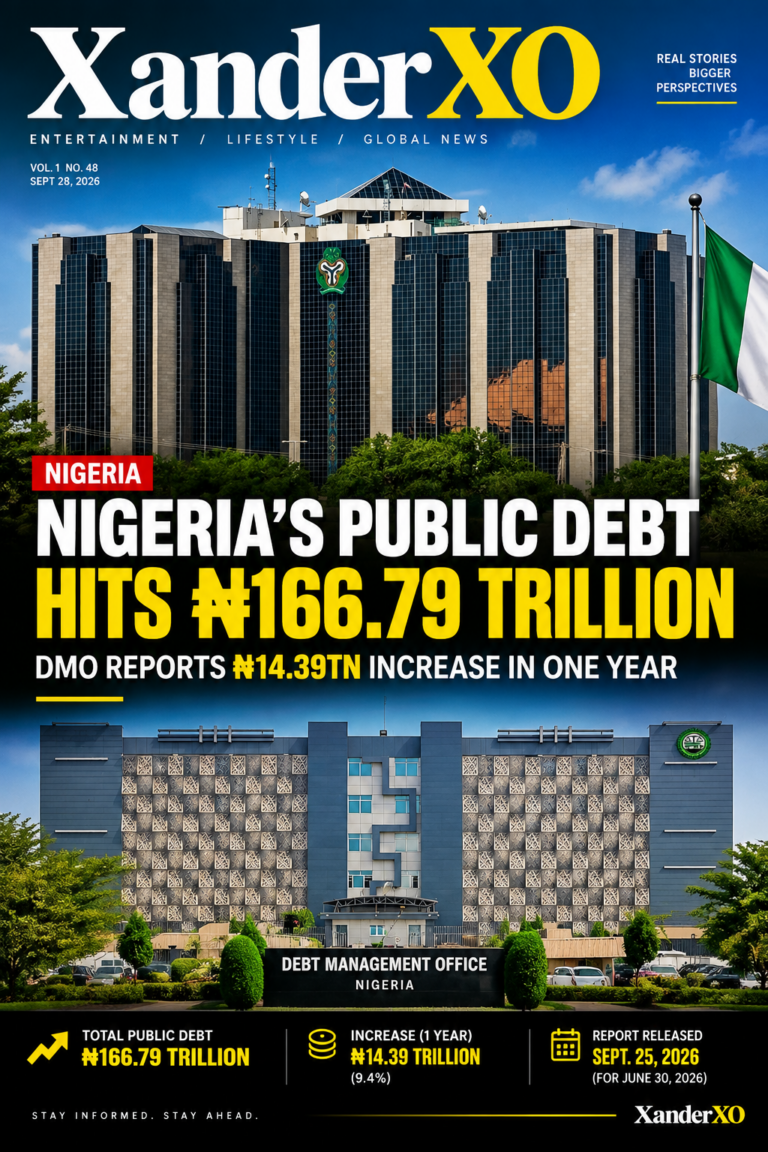
Nigeria’s total public debt has risen to ₦166.79 trillion as of June 30, 2026, according to the latest report from the Debt Management Office (DMO). The new figure represents an increase of ₦7.44 trillion, or 4.7 per cent, from the ₦159.35 trillion recorded at the end of the first quarter of 2026. The DMO’s figures also show that the country’s debt stock increased by ₦14.39 trillion, or 9.4 per cent, compared with the ₦152.4 trillion recorded at the end of June 2025. Domestic debt accounted for ₦91.59 trillion, representing 54.91 per cent of the total debt stock, while external debt stood at ₦75.2 trillion, or 45.09 per cent. The Federal Government accounted for ₦152.77 trillion of the total debt, comprising ₦86.99 trillion in domestic obligations and ₦65.77 trillion in external debt. States and the Federal Capital Territory accounted for the remaining ₦14.01 trillion. The DMO also put Nigeria’s total public debt at $120.93 billion as of June 30, 2026. The agency said the external debt was converted using the Central Bank of Nigeria’s official exchange rate of ₦1,379 to the dollar as of June 30. The latest figures provide a fresh picture of Nigeria’s borrowing position as the government continues to manage its financing needs and public expenditure.

Similar Posts
37 Suspected Illegal Miners Die in NSCDC Custody as Niger Orders Investigation
A major investigation has been launched in Niger State after 37 people suspected of illegal mining reportedly died while in the custody of the Nigeria Security and Civil Defence Corps (NSCDC). The victims were among people arrested during enforcement operations targeting suspected illegal mining activities around the M.I. Wushishi/Lukoto area of Minna on September 15…
Nigeria Raises ₦748.6bn Through FGN Bonds as Investor Demand Remains Strong
The Federal Government has raised ₦748.64 billion through its latest Federal Government of Nigeria (FGN) bond auction, with investors placing significantly more bids than the government offered. The September 2026 auction featured two long-term securities: a new 10-year FGN bond and a reopening of a 15-year FGN bond. According to the Debt Management Office (DMO),…
ONE DONOR, HUNDREDS OF CHILDREN: DUTCH SPERM DONOR CASE SPARKS FERTILITY DEBATEA
Dutch sperm donor has become the focus of an extraordinary legal case after his donations were linked to at least 550 children, raising fresh questions about donor limits and the way fertility donations are monitored.Jonathan Meijer was ordered by a court in The Hague in 2023 to stop donating sperm to new prospective parents after…
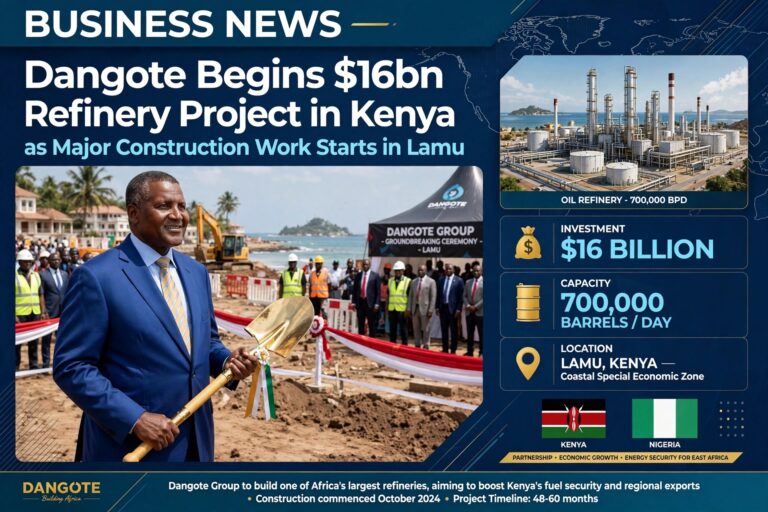
Dangote Begins $16bn Refinery Project in Kenya as Major Construction Work Starts
Nigerian billionaire Aliko Dangote has expanded his petroleum business beyond Nigeria following the commencement of construction on a proposed $16 billion oil refinery project in Kenya. The groundbreaking ceremony for the massive project was held in Lamu, Kenya, on Wednesday, September 30, 2026, attracting attention across Africa’s energy sector. The proposed refinery is expected to…
🇳🇬 NIGERIA’S PUBLIC DEBT HITS ₦166.79 TRILLION AS DEBT STOCK RISES BY ₦14.39 TRILLION IN ONE YEAR
Nigeria’s total public debt stock rose to ₦166.79 trillion as of June 30, 2026, according to the latest figures released by the Debt Management Office (DMO). The DMO published the debt report on September 25, 2026, showing that the country’s debt increased from ₦152.40 trillion in June 2025 to ₦166.79 trillion a year later —…
Peter Obi’s Wife’s ₦200m+ Hermès Bag Sparks Outrage: Nigerians Begin Asking Questions
A luxury handbag reportedly carried by Margaret Obi, wife of Labour Party presidential figure Peter Obi, has suddenly become the centre of a heated online debate, with Nigerians questioning the price of the designer item and what it means for Peter Obi’s carefully cultivated image of frugality. Photos and videos of Margaret Obi carrying what…