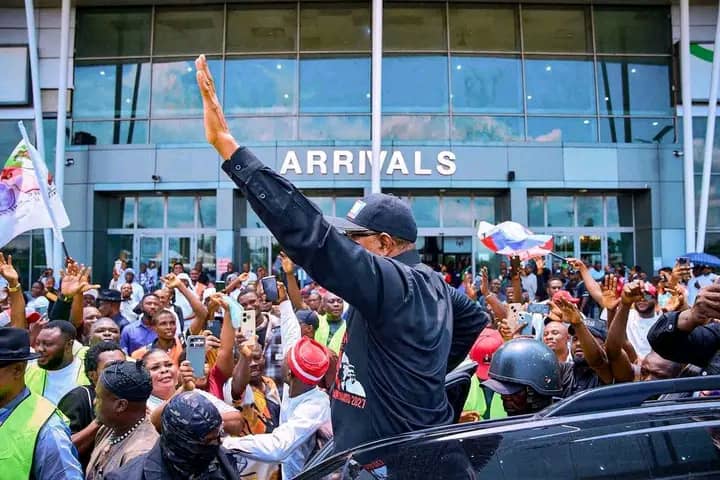
The political tension in Benue State took a new turn on Tuesday as Labour Party leader and presidential candidate, Peter Obi, was prevented from visiting victims of the June 2025 massacre in Yelwata community. What was meant to be humanitarian visit quickly turned into a political controversy, with both Obi and the Benue State Government giving different accounts of what happened. In a statement posted on his X handle, Obi said he traveled to Benue at about 9:00am on a “purely humanitarian mission”. He explained that he wanted to visit Yelwata in Guma Local Government Area, where over 270 people were reportedly massacred in June 2025.
According to him, the purpose was “to mourn with our people, to listen to families who have lost loved ones, and to offer comfort at a moment of unimaginable sorrow”. Obi also said he was carrying relief materials worth billions of naira for the displaced families. This is not his first attempt. He disclosed that a similar visit was planned for April 14 as part of IDP outreach, but it did not materialize after communication with the governor’s office broke down.
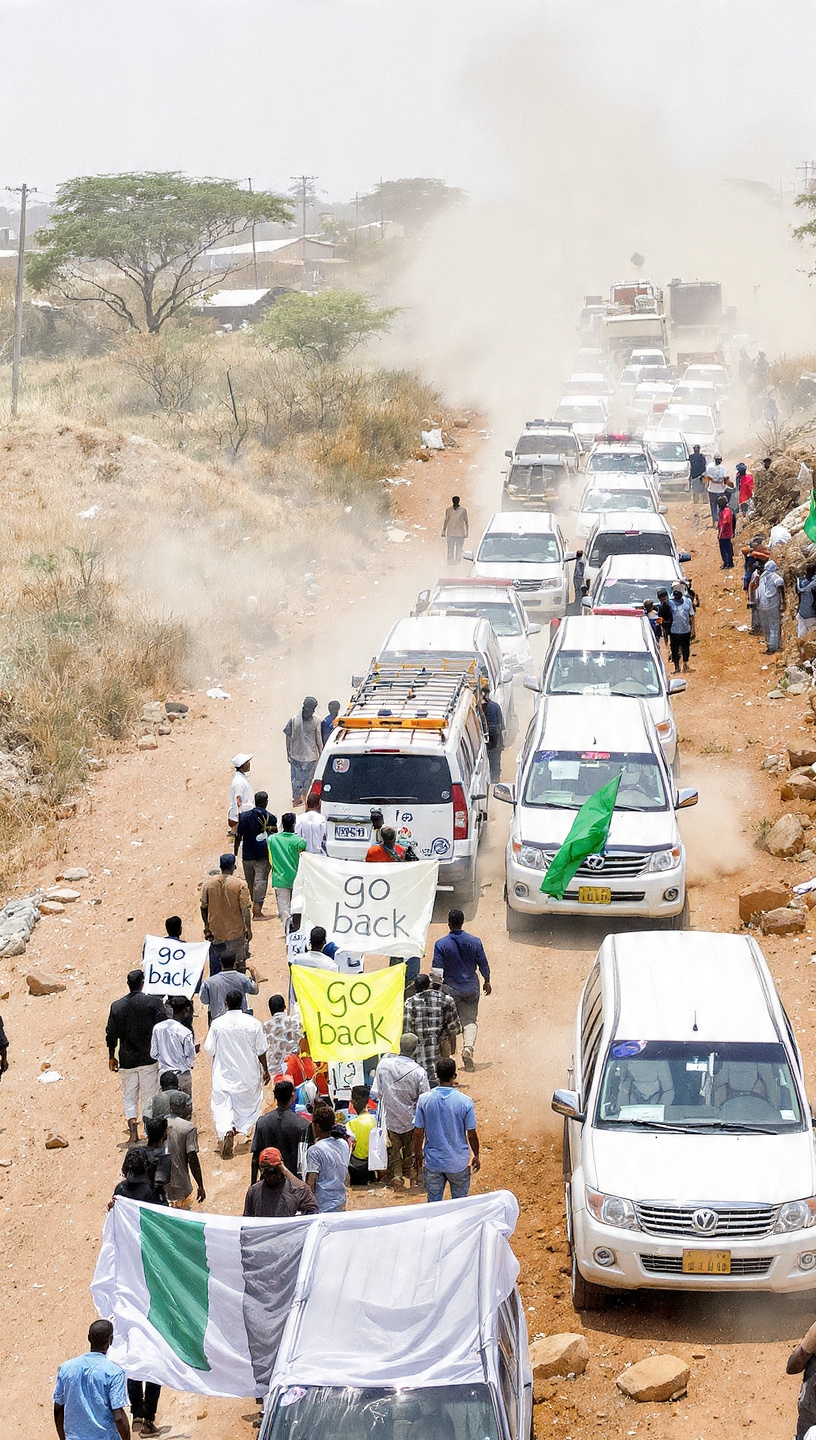
Obi alleged that his convoy was blocked at Gyado Villa along Gboko Road by a group of youths chanting “Peter Obi, go back”. He described them as “hired thugs” and claimed the protest was led by an aide to Governor Hyacinth Alia. He said the youths appeared armed and that continuing would have put lives at risk. Because of the blockade, Obi said he had no choice but to return to Abuja. “I came to Benue not for partisan politics,” he said. “The people of Benue and other Nigerians deserve to live, travel and cultivate their land without fear.” The Benue State Government, however, said it was not aware of Obi’s visit. Speaking to Vanguard, the Chief Press Secretary to Governor Alia, Kula Tersoo, said neither the governor nor the state government received any official notification. Tersoo argued that as a presidential candidate and former two-term governor, Obi should have informed security agencies for adequate protection. “If you are visiting a state, the security apparatus of the state is supposed to know. The Commissioner of Police, Director of DSS, Civil Defence and others are supposed to be aware,” he said. The Commissioner for Information, Solomon Iorpev, went further, saying: “Peter Obi is just looking for our trouble” and described the visit as a “breach of protocol”.The government also dismissed claims that Governor Alia deployed youths to stop Obi, saying “the governor does not promote thuggery”. The incident happened days before President Bola Tinubu’s solidarity visit to Benue over the same massacre. Obi criticized the president’s visit, calling it a “carnival” instead of solemn mourning. He said condolence visits should be marked by “silence and solemnity, not banners, music, and rehearsed spectacles”.He also condemned the Benue government for allegedly lining up school pupils in the rain to welcome the president. Beyond the back-and-forth, the core issue remains the June 13, 2025 Yelwata attack that left over 200 people dead and thousands displaced. Obi insists his mission was humanitarian. The Benue government insists protocol was ignored. But the question many Nigerians are asking is: *Should grieving families wait for government approval before they receive comfort? In a country where trust in government is low and attacks are frequent, the optics of blocking a former governor from visiting victims will continue to fuel debate.
Obi has vowed to return. “Of course, I’ll come back several times,” he said. For now, Yelwata waits. And so does the conversation about leadership, empathy, and politics in times of grief.
Similar Posts
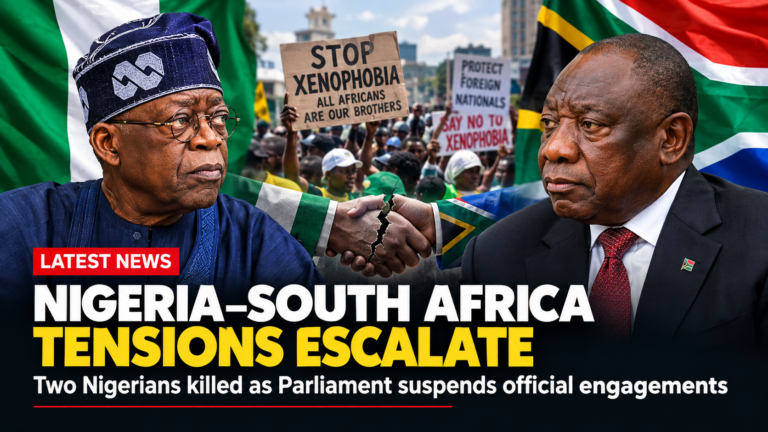
Nigeria-South Africa Tensions Escalate as Two Nigerians Are Killed Amid Anti-Migrant Violence
Tensions between Nigeria and South Africa have intensified following the reported deaths of two Nigerian nationals in South Africa, as concerns over the safety of Nigerians living and doing business in the country continue to grow. Nigeria’s Ministry of Foreign Affairs confirmed that two Nigerian citizens, James Uchechukwu Nwankwo and Bishop Taiwo Michael Fakunle, were…
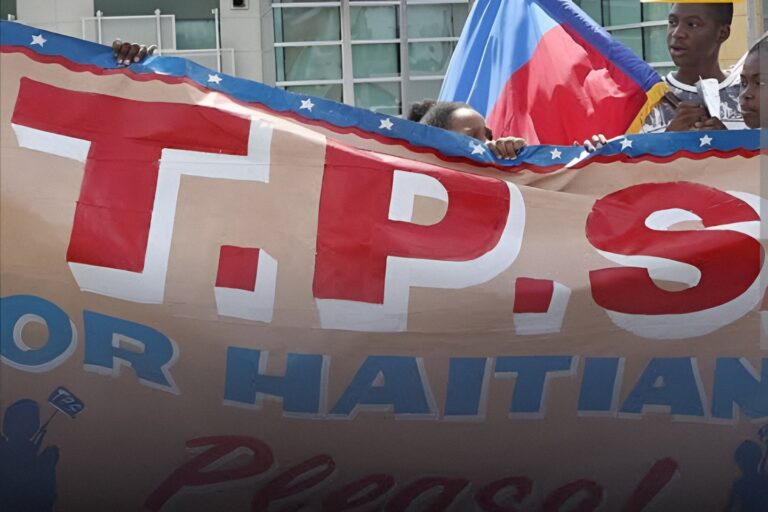
The Massive Fallout of Haiti’s Abrupt TPS Termination
The sudden and formal termination of Temporary Protected Status (TPS) for Haitian nationals living within the United States has triggered an immediate humanitarian and economic crisis. The administrative decision places an estimated 350,000 individuals—who have built legally recognized lives, businesses, and families in the U.S. over years of displacement—under immediate threat of forced deportation back…
Dangote Refinery Launches $1.6 Billion IPO, Plans $14.3bn Expansion to 1.4m Barrels Per Day by 2029
Africa’s largest refinery is about to get even bigger. The Dangote Petroleum Refinery has secured approval from the Securities and Exchange Commission, SEC, to launch a $1.6 billion Initial Public Offering, IPO, in what will be Africa’s biggest share sale ever. At the same time, the refinery announced plans for a $14.3 billion expansion that…
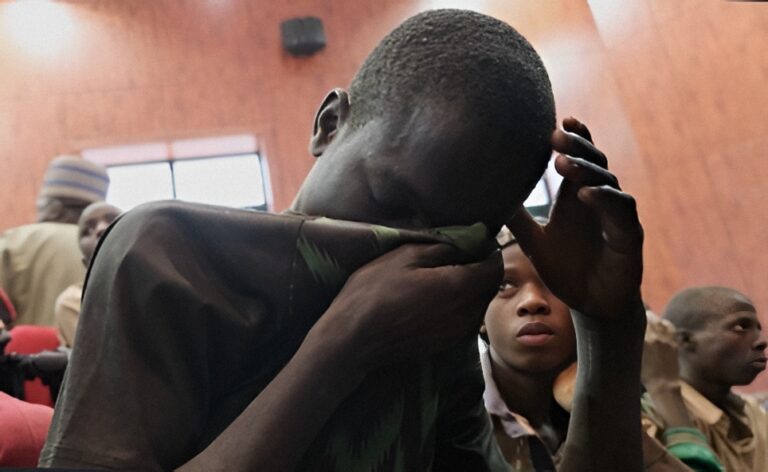
The 7-Billion-Naira Enterprise: Documenting Nigeria’s Exponential Kidnapping Crisis
Internal intelligence and security sector consensus figures have confirmed a devastating 66% surge in kidnapping incidents across Nigeria, illustrating a total breakdown of local containment strategies. Comprehensive data tracking abductions between July 2025 and mid-2026 reveals that Nigerian citizens paid a staggering minimum of 7.78 billion naira in direct cash ransoms to criminal syndicates and…
US GOVERNMENT ANNOUNCES $10MILLION REWARD FOR INFORMATION ON IRAN CYBER COMMAND LEADER
The United States Department Of states has announced a reward of up to $10million for information on Amir Yaryab, identified as the leader of the Cyber Operations Command of Iran’s Islamic Revolutionary Guard Corps Cyber Electronic Command (IRGC-CEC). The announcement was made under the Department Of State’s Rewards for Justice Programme, operated by the Diplomatic…