The Federal Government has maintained its opposition to restoring petrol subsidies, arguing that recent commercial price adjustments should not be mistaken for a return to the former subsidy system. The Federal Government has reiterated its position against bringing back petrol subsidies, keeping fuel pricing and the cost of living at the centre of Nigeria’s economic debate. The latest remarks come amid continuing concerns over petrol prices, transportation costs and the effect of higher operating expenses on households and businesses. According to reports, Finance Minister Taiwo Oyedele said there would be no return to fuel subsidies or multiple exchange rates. The government’s position is that adjustments made by fuel retailers or other market participants should not automatically be interpreted as a reversal of the policy that removed the former subsidy arrangement. The removal of petrol subsidies fundamentally changed how fuel prices are determined and how the government manages the associated financial burden. Supporters of the policy argue that ending the subsidy reduces pressure on public finances and allows government resources to be directed towards other priorities. Critics, however, point to the immediate consequences for ordinary Nigerians, including higher transport fares, increased distribution costs and the effect of fuel prices on food and other essential goods. These concerns have made the policy one of the most debated aspects of Nigeria’s economic reforms. Petrol is an important input for transport, power generation and the movement of goods in many parts of Nigeria. When fuel becomes more expensive, transport operators may raise fares, while businesses that depend on generators or fuel-powered logistics may face higher costs. Those increases can eventually affect the prices consumers pay for food, manufactured goods and services. For households with limited incomes, even modest increases in daily expenses can create significant financial pressure. The distinction between a commercial pricing decision and a government subsidy is important. A company may reduce its retail margin or adjust its prices for business reasons without the government directly paying the difference between the market price and the price paid by consumers. The exact financial arrangements behind any particular price reduction should be assessed using official explanations and verifiable information. The government’s position is that such commercial decisions should not be confused with a restoration of the former subsidy system. The central concern for consumers is whether petrol prices and transport costs will become more manageable. The government faces pressure to demonstrate that its economic policies can produce benefits that households can feel in their daily lives. At the same time, businesses and investors will be watching how fuel pricing, exchange-rate policy and other economic decisions affect production and investment. For now, the Federal Government has maintained that petrol subsidies will not return. The debate is likely to continue as Nigerians assess the consequences of the policy and demand measures to reduce the burden of living costs.
Similar Posts
INEC SOUNDS ALARM OVER FAKE VOTER REGISTRATION WEBSITE
The Independent National Electoral Commission has warned Nigerians against a fraudulent website claiming to offer a fresh online voter registration exercise. INEC issued the warning on Saturday as preparations continue ahead of the 2027 general elections. The electoral body said a fake website had been circulating claims that a new nationwide online voter registration exercise…
POLITICAL TENSIONS BUILD AS NIGERIA’S PARTIES PREPARE FOR 2027 ELECTIONS
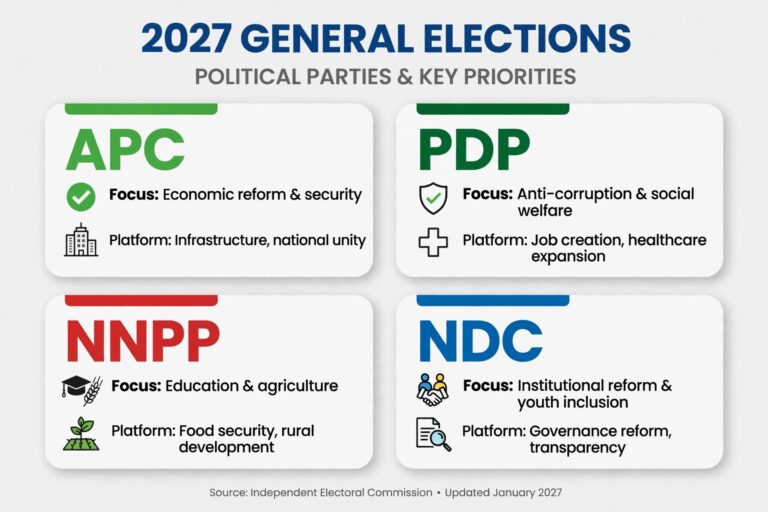
Political competition is intensifying in Nigeria as parties and their leaders position themselves ahead of the 2027 general elections, the coming election is expected to focus attention on the economy, insecurity, employment, public infrastructure and the cost of living. President Bola Tinubu’s administration will face scrutiny over its economic policies and the extent to which…
Truck Crushes NYSC Member to Death in Ibadan, Several Others Injured
IBADAN — Tragedy struck Ibadan, the Oyo State capital, after an articulated truck reportedly rammed into several vehicles, killing a serving member of the National Youth Service Corps (NYSC) and leaving other people injured. The incident occurred on Monday around the Agodi Gardens area, behind the Oyo State Government Secretariat, according to a report published…
Military pay review: Generals’ pensionable salary rises to N2.5m monthly
The Federal Government has approved a new pensionable salary structure for personnel of the Nigerian Armed Forces, with Generals, Admirals and Air Chief Marshals topping the scale at an annual gross pensionable salary of N29.75m. The approval, contained in a September 3, 2026 circular issued by the National Salaries, Incomes and Wages Commission, takes effect…
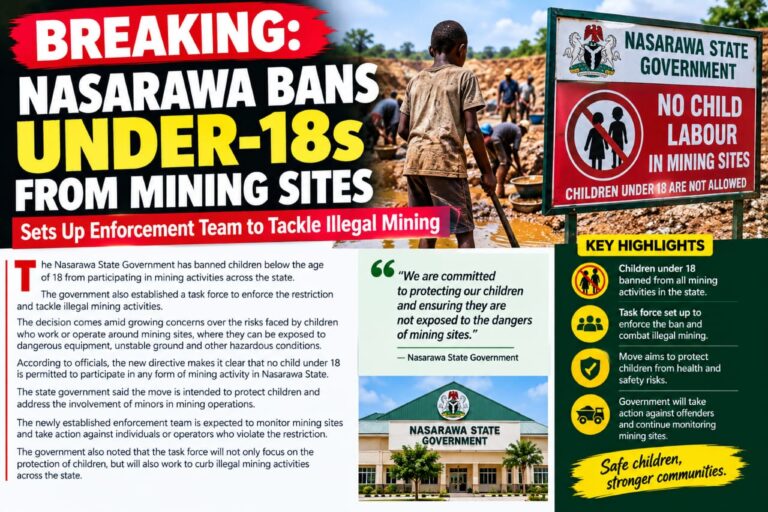
BREAKING: Nasarawa Bans Under-18s From Mining Sites, Sets Up Enforcement Team
The Nasarawa State Government has banned children below the age of 18 from participating in mining activities across the state. The government has also established a task force to enforce the restriction and tackle illegal mining activities. The decision comes amid concerns over the risks faced by children who work or operate around mining sites,…
Army Rescues Six Kidnapped Victims in Benue
Troops of the Joint Task Force, Operation Whirl Stroke, have rescued six kidnapped victims in Katsina-Ala Local Government Area of Benue State. The victims were rescued around Gbise community on September 25 after troops reportedly received credible information about their release while conducting patrols in the area. The Acting Media Information Officer of the task…