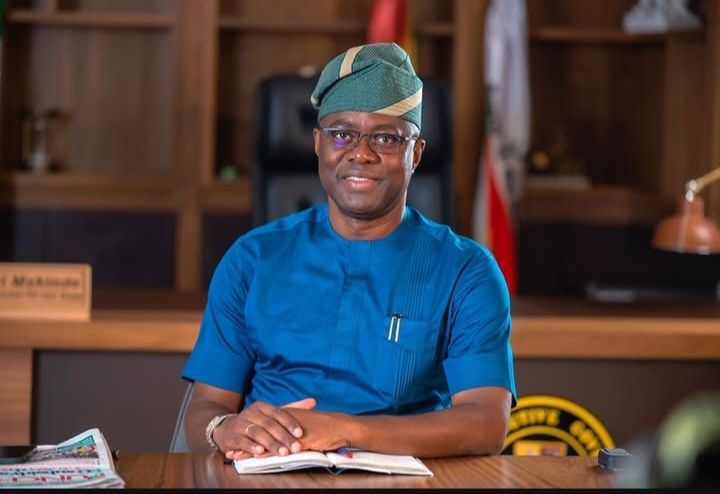
The Oyo State governor has called on Christians to participate more actively in politics, arguing that poverty and national development deserve greater attention than religious divisions. Oyo State Governor Seyi Makinde has urged Nigerians to look beyond religious differences and focus on the economic and social problems affecting the country. Makinde reportedly made the remarks in Abuja during an event marking the 50th anniversary of the Christian Association of Nigeria (CAN), where he received a Christian Icon Award. According to reports, the governor argued that poverty remains one of Nigeria’s major challenges and called on Christians to become more involved in political processes. His comments come as political parties and potential candidates intensify preparations for the 2027 general elections. During his address, Makinde reportedly questioned the tendency among some Christians to avoid politics because they consider it morally compromised. He urged them to reconsider that position, arguing that withdrawing from political participation could limit their ability to influence decisions affecting society. The governor also referred to biblical examples to support his argument, including the story of David serving in the palace of King Saul before eventually becoming king. His message was that people who want to contribute to positive change may sometimes need to participate in imperfect systems rather than remain completely outside them. Nigeria is home to people of different religions, ethnic backgrounds and cultural traditions. Religious identity can influence public discussions and political relationships, but the country also faces challenges that cut across these differences. Unemployment, poverty, insecurity, access to education, healthcare and the affordability of essential goods affect people in different communities. Makinde’s remarks suggest that political and religious discussions should not overshadow the practical needs of citizens. His position also reflects a broader argument that national development requires cooperation among people who may not share the same religious or political beliefs. Participation in politics can take several forms, including voting, joining political parties, contesting elections, engaging elected representatives and advocating for policies that improve communities. However, meaningful participation also requires accountability. Citizens must be able to question political leaders, examine their records and evaluate whether their promises match their actions. Religious leaders and organisations can contribute to national discussions, but political choices remain individual decisions that should be informed by credible information and personal judgment. Makinde’s comments have added to discussions about the role of faith communities in Nigerian politics. With the next general election approaching, political leaders are likely to continue appealing to different groups for support. The challenge for the country will be to ensure that political competition does not deepen divisions or distract attention from issues that affect everyday life. Whether voters agree with Makinde or not, his remarks raise an important question: how can Nigerians work across religious and political differences to address poverty and improve living conditions?
Similar Posts
Dangote Refinery Launches $1.6 Billion IPO, Plans $14.3bn Expansion to 1.4m Barrels Per Day by 2029
Africa’s largest refinery is about to get even bigger. The Dangote Petroleum Refinery has secured approval from the Securities and Exchange Commission, SEC, to launch a $1.6 billion Initial Public Offering, IPO, in what will be Africa’s biggest share sale ever. At the same time, the refinery announced plans for a $14.3 billion expansion that…
POLITICAL REALIGNMENT IN OYO AS PDP CANDIDATE, ACCORD ASPIRANT JOIN APC WITH THOUSANDS OF SUPPORTER
SA political realignment has been reported in Oyo State after a Peoples Democratic Party candidate and an Accord aspirant joined the All Progressives Congress alongside thousands of supporters. Hammed Ademola, the PDP candidate for Ibadan North-East State Constituency 2 in the 2027 general elections, reportedly joined the APC on Friday. Adedapo Ojo, an Accord aspirant…
Nigerian Engineer Ndubuisi Ekekwe Unveils Contisx Phone, a Blockchain-Secured Communication Device
Nigerian engineer, inventor and entrepreneur Dr. Ndubuisi Ekekwe has announced the Contisx Phone, a blockchain-based smartphone designed to provide secure communication for individuals, businesses and governments.Ekekwe, who described himself as a Nigerian engineer and inventor, said his journey of building technology began during his university days at the Federal University of Technology, Owerri (FUTO), where…
Tinubu and Nigeria’s 2027 Political Race: The Battle for Aso Rock Takes Shape
Nigeria’s 2027 presidential election is beginning to take clearer shape as political parties and major contenders intensify preparations for what is expected to be another closely watched contest for the country’s highest political office. The Independent National Electoral Commission (INEC) has now released its final list of presidential candidates and their running mates for the…
INEC Under Fire as Isa Pantami Challenges Exclusion From 2027 Gombe Governorship List
ABUJA — The Independent National Electoral Commission (INEC) is facing renewed scrutiny following the exclusion of former Minister of Communications and Digital Economy, Isa Ali Pantami, from its final list of governorship candidates for the 2027 general elections. The development has sparked fresh questions about the management of party primaries, the interpretation of electoral laws…
WAEC WARNS AGAINST ARBITRARY CHARGES AS PARENTS PREPARE FOR 2027 EXAMINATION
The West African Examinations Council (WAEC) has reportedly raised concerns about arbitrary charges imposed on students preparing for the 2027 May/June West African Senior School Certificate Examination. The development was reported on October 17 following remarks attributed to WAEC’s Head of National Office in Nigeria, Suleiman Danlami Kum. According to the report, Kum said the…