The cost of living remains one of the most important issues confronting Nigerian households as families continue to balance food, transportation, housing, healthcare and education expenses against available income. The National Bureau of Statistics (NBS) released its latest Consumer Price Index report today.Latest Verified Statistics from NBS September 2026: Headline inflation: 14.63% year-on-year in September 2026, down from 15.39% in August 2026 and 20.98% in September 2025. Month-on-month headline fell to 0.06% from 0.71% in August. • Food inflation: 19.59% year-on-year in September 2026. The bureau said food inflation is lower compared to 20.16% recorded in the same month of the preceding year. On month-on-month, food inflation fell to -1.55% in September from 1.02% in August, indicating average food prices declined during the month. • State disparity: Lagos recorded the highest annual food inflation at 34.4%, followed by Imo at 33.8% and Ondo at 31.5%. Taraba and Yobe recorded negative annual food inflation at -7.5% and -0.4%, showing price declines versus last year. Cost of a Healthy Diet: NBS Cost of a Healthy Diet report puts the least expensive healthy diet at N1,513 daily, up 3.76% from January 2026 and 12.4% versus February 2025, underscoring pressure on household incomes. Household perception of hardship: CBN household survey weighted by NBS framework shows 68.4% of Nigerians earning below N70,000 perceived inflation as high in August 2026, compared to 30.8% among households earning above N450,000, highlighting disparity by income. Food is a major part of spending, making the 19.59% food inflation rate critical. The NBS noted Lagos, Imo and Ondo pressures are far above the national average, while Taraba and Yobe saw declines. Transportation costs affect workers and students who depend on public transport. When expenses rise faster than income as seen in the N1,513 daily healthy diet cost families reduce spending or seek additional income. Small businesses face higher costs for electricity, transport and raw materials, affecting pricing and margins. The federal government has defended reforms including fuel subsidy and foreign exchange changes as addressing structural problems. The latest NBS data shows inflation has declined by 6.35 percentage points year-on-year from 20.98% to 14.63%, marking the third consecutive monthly drop. However, food inflation at 19.59% remains elevated and uneven across states, which explains why critics argue broader gains have not translated into tangible benefits. This debate will remain prominent ahead of the 2027 general elections. A slower rate of increase 0.06% month-on-month headline in September versus 0.71% in August means prices are rising slower, not that they have returned to previous levels. Households are still paying substantially more than in 2024/2025, as shown by the healthy diet cost up 12.4% year-on-year. Stable policies, job creation and targeted support for vulnerable groups. For households earning below N70,000 the group reporting highest inflation perception careful budgeting helps but does not solve structural price pressures. The central test is whether the headline improvement to 14.63% and the month-on-month food price decline of -1.55% will be sustained and spread to high-inflation states, and whether incomes recover enough to bring the N1,513 daily healthy diet within reach.
Similar Posts
How the iPhone Evolved From a Simple Touchscreen Phone to a Global Icon
When Apple introduced the first iPhone in 2007, it was difficult to predict just how much the device would change the mobile phone industry.At the time, smartphones were already around, but Apple took a different approach. Instead of relying on a physical keyboard or stylus, the company put a touchscreen at the centre of the…
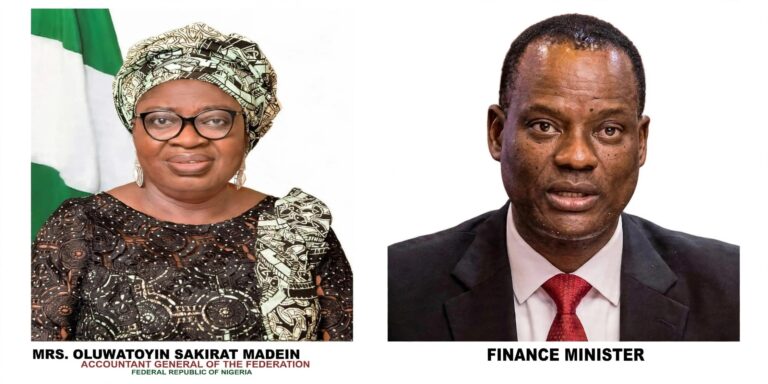
REPS SUMMONS FINANCE MINISTER, ACCOUNTANT-GENERAL OVER REPORTED ₦75 BILLION UBEC DEBT
The House of Representatives’ Public Accounts Committee has summoned senior federal finance officials to explain the reported ₦75 billion owed to the Universal Basic Education Commission and provide a clear repayment timetable. The House of Representatives has intensified scrutiny of public financial management after its Public Accounts Committee summoned the Minister of Finance and Coordinating…
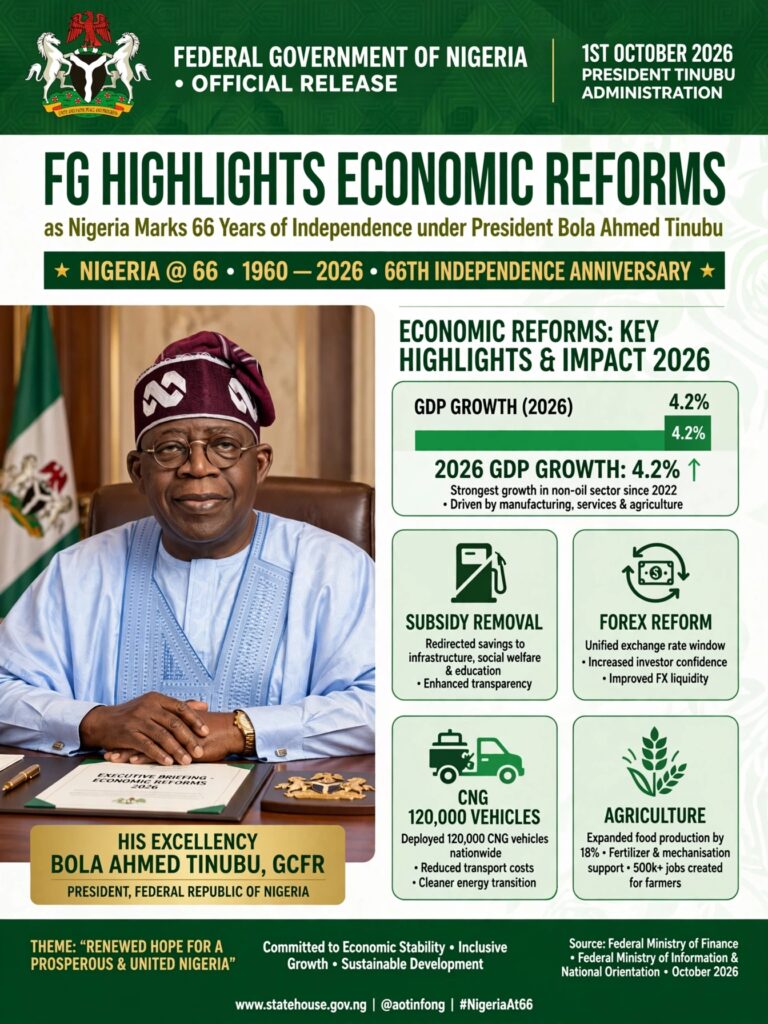
FG Highlights Economic Reforms as Nigeria Marks 66 Years of Independence
The Federal Government has highlighted economic reforms introduced under President Bola Ahmed Tinubu as Nigeria marks its 66th Independence Anniversary. Secretary to the Government of the Federation, George Akume, made the remarks on Wednesday during the 66th Independence Anniversary Public Lecture in Abuja. Akume said the administration’s reforms since 2023 were designed to address longstanding…
LAGOS POLICE DETAIN FOUR OFFICERS AFTER VIRAL HARASSMENT VIDEO
The Lagos State Police Command has reportedly detained four police officers and disbanded their tactical team following the circulation of a viral video allegedly showing officers harassing a young man in the Odogunyan area of Ikorodu. The development was reported on October 23, 2026, after the command announced that the officers had been identified and…
Borno Attack: At Least 8-10 Soldiers Reportedly Killed as ISWAP Militants Target Military Base in Kukawa
The reported attack highlights the continuing security challenges facing communities and military formations in northeastern Nigeria. At least 8 to 10 Nigerian soldiers were reportedly killed when suspected Islamic State West Africa Province (ISWAP) militants attacked a military base in Kukawa Local Government Area of Borno State. The attack, which occurred on Tuesday evening, October…
Navy Recovers 80,000 Litres of Suspected Stolen Crude, Arrests Three
The Nigerian Navy has recovered approximately 80,000 litres of suspected stolen crude oil during operations in the Niger Delta and arrested three suspected drug traffickers in a separate operation. The operations involved personnel of the Nigerian Navy Ship Delta and the National Drug Law Enforcement Agency. According to the Navy, two anti-crude oil theft operations…