THE INVISIBLE WEIGHTS YOUNG PEOPLE CARRY AND SOLUTIONS TO REGAINING YOUTHFUL VITALITY
Does being young always mean being strong?
Before today, it was enough to adorn a person’s age with the strength displayed. Young people had glory in their strength. Herculean tasks were mostly performed by young people, and less herculean duties were left for aged people. However, today, young people do not display strength as used to be the case. Some young people today do not possess the strength of their youth as expected.
While some people think youths today are generally lazy, others say the ‘Gen Z’ has no strength for physical duties or tasks requiring physical exertion of force.
This article seeks to examine the reasons for the possible reduced vitality of today’s youth and proffer helpful solutions to tackling this issue.
A youth is an individual who is not yet old but still young.
According to the Concise Oxford Dictionary, “youth is the state of being young, the period between childhood and adult age”. A young person has vigour, strength, and enthusiasm that comes with this age. Generally, people between the ages of 20 and 45 could be categorised as youth. However, the African Youth Charter groups people within the ages of 15 to 35 years as youth.
Many youths today report feeling tired and drained and complain of fatigue too easily. This could be as a result of the emotional or invisible distress that youths encounter in certain aspects of life.
1.Constant Exposure to Social Media Perfection: The digital age we are in exposes young people to the perfect lives of others put out on social media. This gradually wears down the mind of a growing individual, as it breeds comparison and the feeling of being inadequate.
2.The Pressure to Balance It All:
There is strong pressure on every young person to balance all areas of their life so as to maximise their talents, strength, or opportunities. Young people try to balance areas of life such as career, academics, hobbies, skills, fitness goals, and even rest. This pressure hits so hard that, in a bid to create a balance, there is a degradation in the emotional health and overall well-being of youths.
3. Isolation from the Physical Environment:
There is another overbearing weight that comes from being isolated from the physical environment. Young people, despite being digitally present, may be absent from events and happenings in their immediate environment. The reduced physical, face-to-face interaction has been replaced with online interaction, and this, without a doubt, saps some energy and vitality from today’s youth.
REGAINING YOUTHFUL VITALITY:
Strength lost can be regained, and energy can be renewed for better productivity. Young persons can intentionally create a balance between health and usefulness, maximising their vitality for productivity.
1. Building a Balanced Life Outside Social Media Expectations:Young people should train to build resilience and capacity, look away from comparison, and settle at reaching goals they set for themselves.
2. Practicing mindfulness: While striving to create a balance in aspects of life, youthfulness should be complemented with mindfulness. Young people should practise mindfulness and connect better with their own world. Mindfulness can involve taking some time away from social media, reflecting on personal goals or making time for meaningful face-to-face interactions.
3. Seeking support: Also, being young may require support. Young people should seek support and guidance in areas they deem necessary.
So, yes, a youth should be a youth in mind and at heart, energetic at work, and productive in results.
Being a youth means being strong. Young people, let us create a balance for youthfulness, usefulness, strength, and vitality.

Similar Posts
7 Things Every 100-Level Student Should Know Before Their First Semester
100 Level Students, Freshers, University Life, Student Tips, Academic Success, First Semester, Study Tips, Undergraduate Students, Education, AE-FUNAI
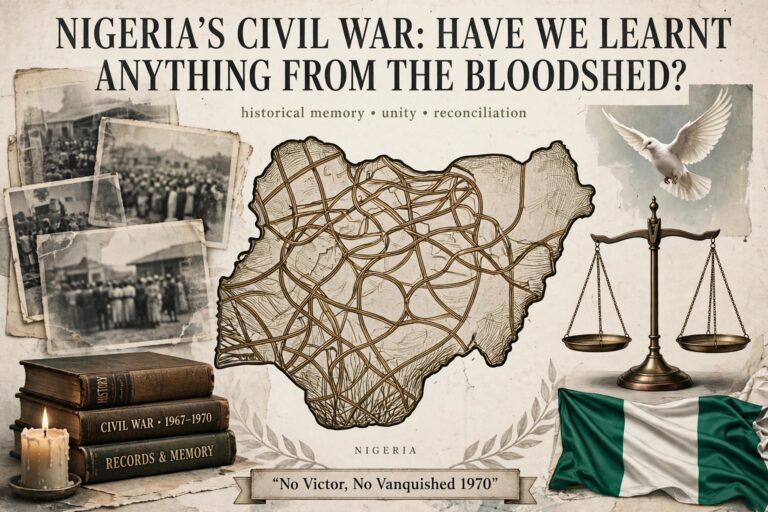
NIGERIA’S CIVIL WAR: HAVE WE LEARNT ANYTHING FROM THE BLOODSHED?
History has a painful way of returning to societies that refuse to learn from their past. For Nigeria, few historical experiences carry as much weight as the Nigerian Civil War of 1967–1970, a conflict that left countless families grieving, communities devastated and an entire generation scarred by loss. More than five decades after the war…
Educated, Unemployed and Unprepared: Is the Nigerian University Producing Graduates the Economy No Longer Needs?
CHIME CHUKWUAGOZIEM J. LL.bChukwuagoziem2003@gmail.com There is an uncomfortable question Nigeria must eventually answer: what is the social value of an education that confers a qualification but fails to confer meaningful economic capacity?For generations, the Nigerian university has operated almost as an article of faith. Go to university. Obtain a degree. Find a job. Build a…
SEPTEMBER 11 CHANGED THE WORLD: HAVE WE FOUND THE RIGHT BALANCE BETWEEN SECURITY AND FREEDOM?
Some historical events alter not only the lives of those directly affected but also the policies, fears and political priorities of countries thousands of kilometres away. The terrorist attacks of September 11, 2001, did precisely that. The attacks killed nearly 3,000 people in the United States and reshaped international security policy, military strategy, airport screening,…
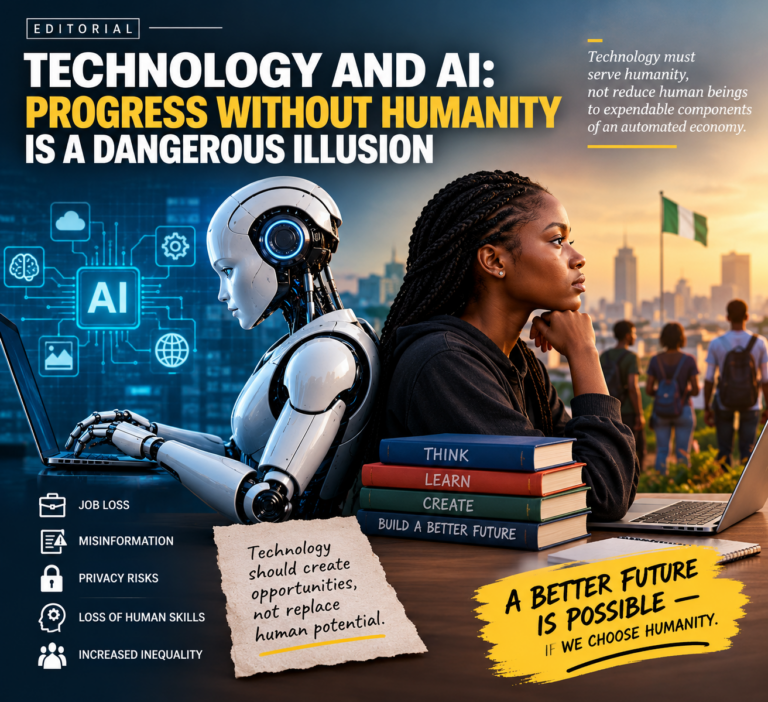
TECHNOLOGY AND AI: PROGRESS WITHOUT HUMANITY IS A DANGEROUS ILLUSION
Artificial intelligence is advancing at extraordinary speed, but society must confront an uncomfortable truth: technological progress does not automatically translate into human progress. We are living in an age where machines can write, analyse, create images, imitate voices and perform tasks once considered exclusively human. Artificial intelligence is transforming industries, reshaping economies and challenging our…
Broke People Don’t Get to Philosophise About Money(So I Did It for Us)
I was having a conversation with a friend and I realised everything we talked about revolved around money. For any of our plans to work or even fail, it needed money. It got me thinking: how did the world become so dependent on money, or its modern equivalents? How did power get so tightly attached…