There was a time when Nigeria wasn’t just a huge market for imported products. The country had factories producing cars, tyres, shoes, paper and textiles with thousands of Nigerians working in them.Here are five companies that tell the story of that era.
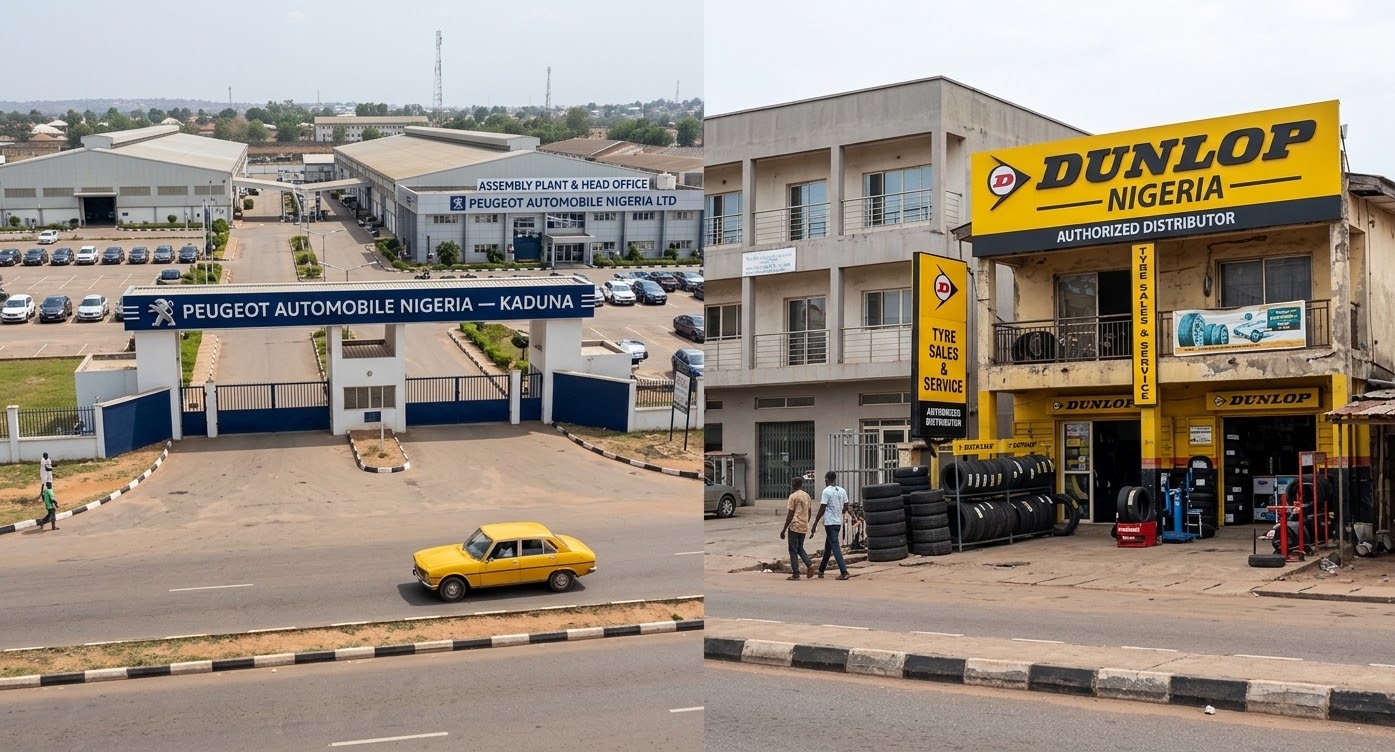
- Peugeot Automobile Nigeria — Kaduna industry: Automobile manufacturing Established by: Federal Government of Nigeria & Automobiles Peugeot of France Employees: About 2,000 in the period documented by UNIDO.PAN began production in 1975 and became one of Nigeria’s biggest automobile plants. Between 1975 and 1985, it produced more than 342,000 vehicles. But economic decline, imported used cars, weak policies and falling production gradually crippled the factory.
- Dunlop Nigeria — Lagos industry: Tyre Manufacturing founder/owner: Dunlop Group employees: More than 1,000 workers at its peak periods.Dunlop was once a major producer of tyres in Nigeria. But rising production costs, unreliable power and competition from imported tyres eventually made local production difficult. Its Nigerian manufacturing operation closed in the late 2000s.
- Michelin Nigeria — Port Harcourt industry: Tyre Manufacturing founder: Michelin, France employees: More than 3,000 direct jobs were reportedly lost when its Nigerian manufacturing operation disappeared.For years, Michelin produced tyres in Port Harcourt and was one of the biggest names in Nigeria’s tyre industry. The factory eventually stopped manufacturing in 2007, with high operating costs, infrastructure problems and competition from imported tyres among the challenges reported.
- Arewa Textiles — Kaduna industry: Textile Manufacturing established with: Support from the Northern Nigerian government and Japanese Interest employees: About 4,200.Arewa Textiles became one of Kaduna’s major industrial employers. But Nigeria’s textile industry suffered from outdated machinery, unreliable power, imports and other economic pressures. The company eventually became one of the many major Kaduna factories that disappeared from large scale production.
- Bata Nigeria — Footwear industry: Shoes and footwear Employees: About 2,000.Bata was once a major footwear manufacturer in Nigeria, producing shoes locally rather than simply importing them. Its Nigerian manufacturing operations eventually declined as imported footwear and changing economic conditions put pressure on local manufacturers. UNIDO records Bata among Nigeria’s major industrial employers of the period. THE BIGGER Story these weren’t small businesses. They represented thousands of jobs, local production and industrial skills.Their decline helped transform Nigeria from a country that manufactured many everyday products into one that increasingly relied on imports.