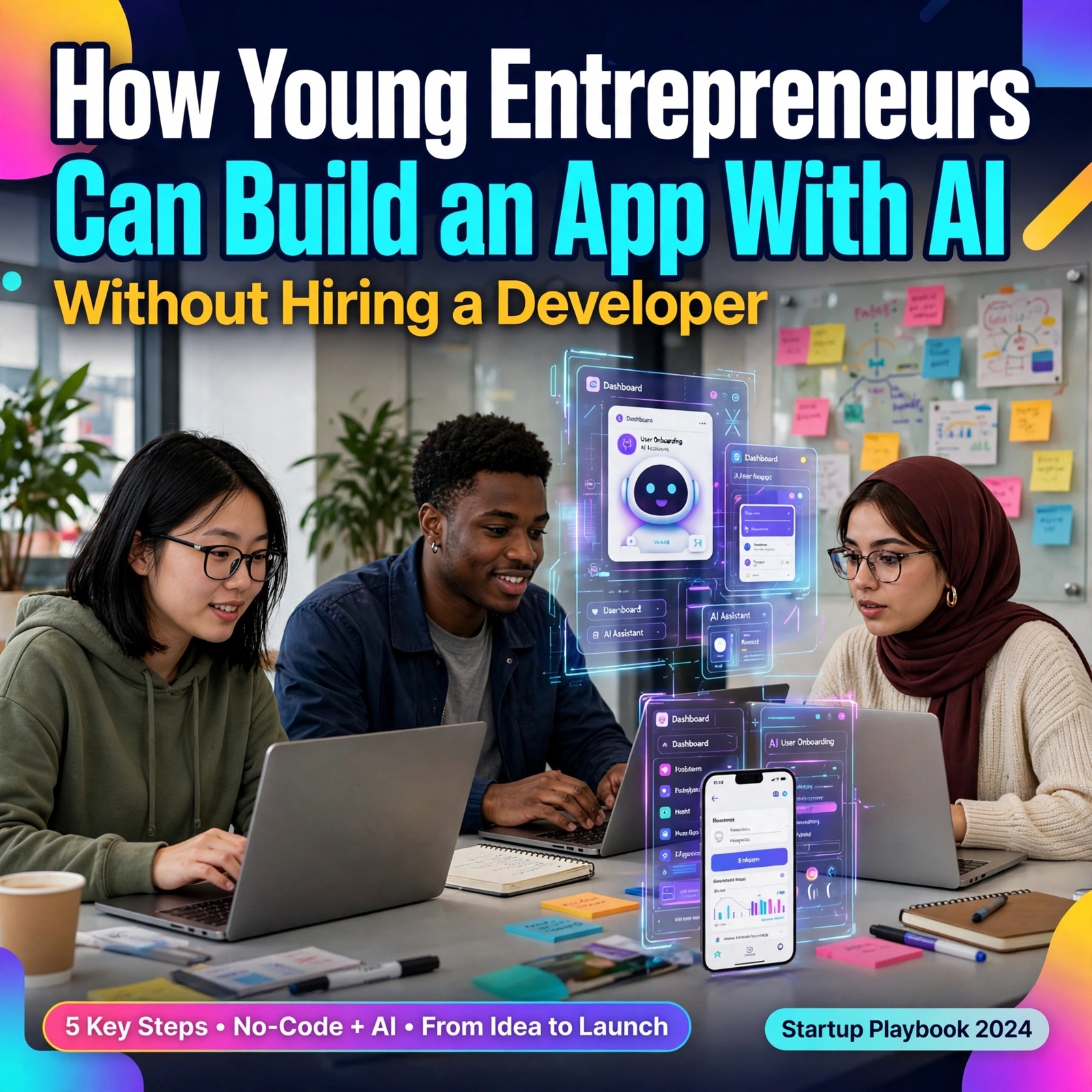
Young entrepreneurs who have business ideas but lack coding skills can use AI-powered platforms such as Lovable to begin building web applications. The platform allows users to describe a product in plain language, generate an initial version and improve it through further instructions
Here is how a beginner can get started.
Step 1: Open Lovable and Create an Account Visit lovable.dev using Chrome on your phone or a computer. Sign up or log in, then open the workspace where you can create a new project.
Step 2: Start a New Project
Select the option to create a new project. Lovable will provide a prompt area where you can describe the application you want to build. For this example, imagine you want to create a directory that helps customers find small businesses in Enugu.
Step 3: Describe the App in Plain Language
After creating an account and starting a project, the entrepreneur writes a prompt explaining the intended application.
For example:
build a mobile-friendly business directory for Enugu. Include a search bar, business categories, product listings, locations and WhatsApp contact buttons. Use clearly labelled sample data and make the main features functional.”
The more specific the instructions, the easier it is to evaluate whether the generated product meets the original goal.
Step 4: Test the First Version Once the AI generates the application, the entrepreneur should examine its features. Do the search and navigation work? Can users submit business listings? Does the application display properly on a mobile phone?If something fails, the developer can describe the problem to the AI and request a correction. Features should be tested individually rather than assuming the generated code is reliable.
Step 5: Add a Database and Security
A prototype may use sample data that disappears when the page is refreshed. A real service generally needs persistent storage, appropriate user authentication and properly configured permissions.Entrepreneurs should also test their applications for security weaknesses before accepting customer information or handling payments.
Step 6: Publish and Find Your First UsersAfter testing, the entrepreneur can publish a web application through the platform’s available publishing options and share its URL with potential users. The first launch does not need thousands of users. A small group of real customers can help reveal problems, identify useful features and establish whether the product solves a genuine need.
Step 7: Improve Before Spending Heavily
AI can help entrepreneurs build an initial product, but it cannot guarantee demand or profitability. Hosting, database services, subscriptions, maintenance and further development may still require money.
A sensible approach is to begin with a small version, collect feedback and expand only when users demonstrate a genuine need.
The Opportunity for Young African Founders
AI-assisted development could give more young entrepreneurs the ability to experiment with software ideas without immediately paying for a full development team. The advantage is not simply building an app cheaply; it is testing ideas faster and learning what customers actually want
For aspiring founders, the next step is straightforward: identify a real problem, build a simple solution, test it with users and improve it based on evidence.