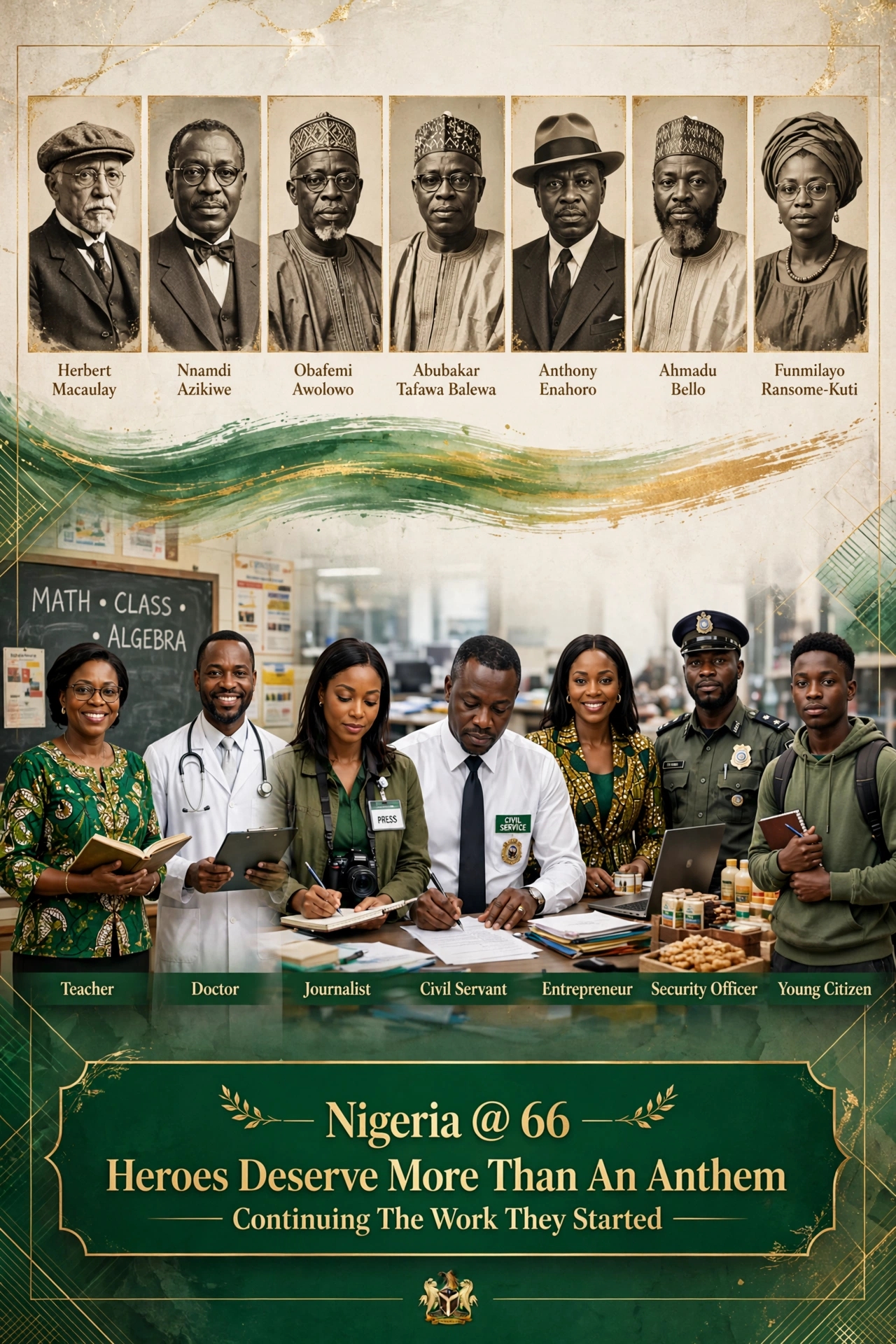
Every October 1, Nigeria remembers her heroes. We hear their names, we see their portraits, we repeat the familiar stories of independence, sacrifice and patriotism. Then the speeches end, the flags come down. And, too often, the lessons disappear with them. But Nigeria’s heroes deserve more than a few paragraphs in an Independence Day speech, They deserve to be remembered for what they actually fought for. Herbert Macaulay challenged colonial policies and helped lay the foundation for organised Nigerian nationalism. Nnamdi Azikiwe used journalism and politics to push nationalist ideas and later became the country’s first President. Obafemi Awolowo advocated federalism and invested heavily in education and development in the Western Region. Anthony Enahoro moved the historic motion for Nigeria’s independence in 1953. Abubakar Tafawa Balewa became Nigeria’s first Prime Minister and played a major role in the country’s transition to independence. These were not perfect men, and Nigeria’s independence was not the achievement of a handful of individuals alone, it was the product of decades of political agitation, journalism, protests, labour action, constitutional negotiations and the efforts of countless Nigerians whose names never became famous. That is the part worth remembering.
Independence was not simply handed to Nigeria. It was demanded, it was negotiated, it was fought for. And it came with enormous expectations.
On October 1, 1960, Nigeria became an independent nation. Tafawa Balewa became Prime Minister, while Nnamdi Azikiwe later became the country’s first President of the First Republic. The question, 66 years later, is not whether we should continue celebrating them.
We should. The question is whether we are still carrying the values that made their struggle meaningful.
What does patriotism mean when public property is treated as nobody’s property?
What does national unity mean when Nigerians increasingly measure one another first by ethnicity, religion or region?
What does freedom mean to a young graduate who cannot find an opportunity to build a future?
And what does independence mean if millions of citizens still feel powerless over the circumstances that determine their lives?
These are uncomfortable questions, but Independence Day should not only be about comfort. It should also be about accountability. The greatest tribute to Nigeria’s heroes cannot simply be another wreath, speech or social-media post.
It is building institutions that work.
It is respecting the rule of law.
It is educating children who will not need to leave Nigeria before they can imagine a successful future.
It is creating a country where hard work has meaning, where talent is not wasted and where citizenship comes with both rights and responsibilities. And perhaps most importantly, it is understanding that Nigeria’s next heroes may not be famous politicians. They may be the teacher who refuses to abandon a difficult classroom.
The doctor who stays when leaving would be easier.
The journalist who refuses to manufacture facts for attention.
The civil servant who rejects a bribe.
The entrepreneur who creates jobs.
The security officer who protects civilians with professionalism.
The young Nigerian who chooses integrity when nobody is watching.
The ordinary citizen who refuses to destroy what belongs to everyone.
History often remembers the names at the top, but nations are ultimately built by millions of ordinary people making extraordinary choices every day. So, on this Independence Day, let us remember Macaulay, Azikiwe, Awolowo, Balewa, Enahoro, Bello, Funmilayo Ransome-Kuti and the many other men and women whose struggles helped shape Nigeria’s path to freedom, but let us also remember something bigger: A country does not honour its heroes by remembering their names. It honours them by continuing the work they started.
Nigeria is 66.
The generation that fought for independence is gone or ageing, the responsibility has moved to us.
The next chapter of Nigeria’s story will not be written by the heroes of 1960.
It will be written by the Nigerians living in 2026.
Similar Posts
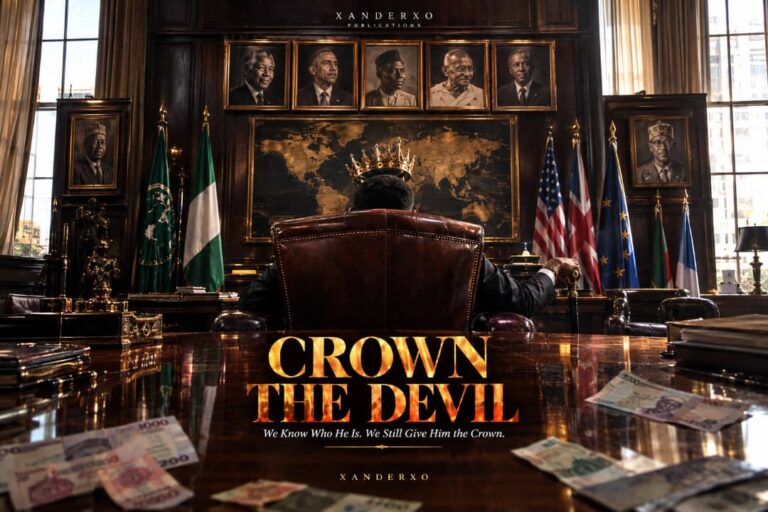
CROWN THE DEVIL
CROWN THE DEVIL We Know Who He Is. We Still Give Him the Crown. XanderXO — THE MOST DANGEROUS CROWN IS NOT ALWAYS FORCED UPON US There is something uncomfortable about power. We complain about it when it hurts us. We criticize it when it fails us. We curse it when the price becomes unbearable….
Has Dating Become the Ultimate Unregulated Investment Scam?
In modern romance, a growing trend has left many questioning whether emotional involvement is turning into a calculated financial enterprise. Across online forums and social media platforms, stories circulate about partners who pour significant financial, academic, and emotional support into a relationship, only to be abruptly discarded once the recipient reaches stability or success. Sponsoring…
INSTANT NOODLES KILLED A GROUP OF FRIENDS THROUGH CANCER: FACT OR DANGEROUS RUMOUR?
For many years, people have believed that eating instant noodles causes cancer. Some have even claimed that instant noodles killed a group of friends through cancer. But is this really true, or is it simply an old belief that has been passed from one person to another? Let us ask ourselves, what causes cancer? Cancer…
The Future of Medical Education in the Light of Evolving Career Dynamics.
The roots of medical education in Nigeria can be dated back to 1930. Before the establishment of the MBBS programme, medical training was offered in Yaba Training College as a diploma course and it was run by the colonial masters- the British Colonial government. The graduates were awarded Licentiate of Medicine and Surgery (LMS) and…
AFTER GRADUATION, THEN WHAT? NIGERIA’S SILENT WAR ON YOUNG JOB SEEKERS
The graduation gown comes off, the photographs are taken, congratulations pour in, and then reality arrives: “What next?” For many Nigerian graduates, finding a job can be harder than earning the degree itself. Applications are sent, interviews are attended, yet many employers still demand years of experience for entry level positions. It becomes a frustrating…
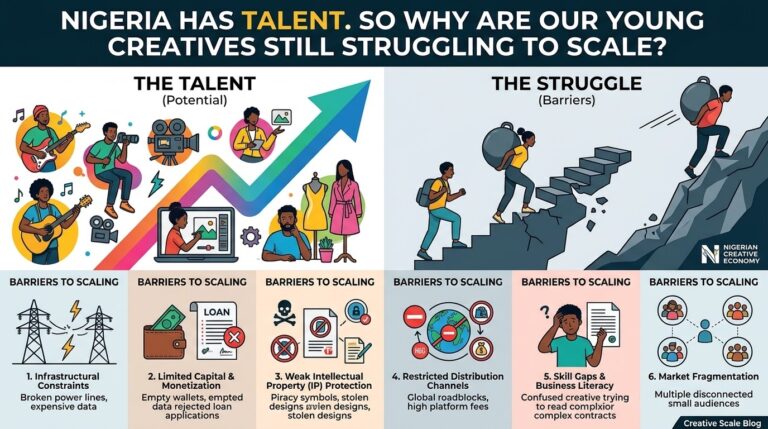
Nigeria Has Talent. So Why Are Our Young Creatives Still Struggling to Scale?
There is probably a Nigerian student somewhere right now with a song sitting unfinished on their phone.Another has a business idea but no money to start it. Someone else knows how to take amazing pictures but cannot afford a proper camera. A young filmmaker has the ideas but no equipment, while another talented creator is…