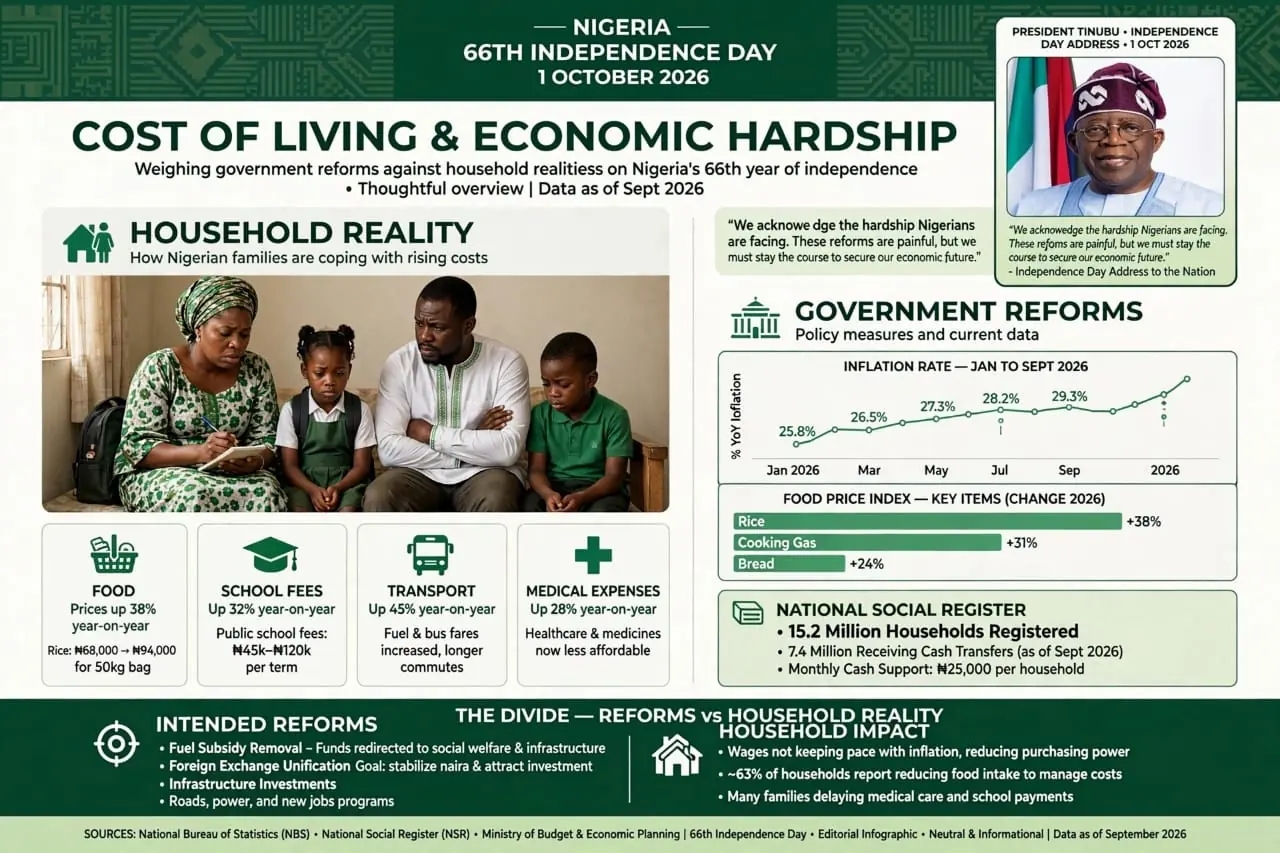
As Nigeria marks its 66th Independence Anniversary, the country’s economic challenges remain one of the major issues dominating public discussion. While Independence Day traditionally provides an opportunity to celebrate Nigeria’s achievements and national identity, this year’s anniversary is also being observed against the backdrop of continued concerns over the cost of living. President Bola Ahmed Tinubu acknowledged the difficulties faced by millions of Nigerians during his Independence Day address on Thursday. The President recognised that some families continue to struggle with basic needs, including food, school fees, medical expenses and transportation. He said the government was aware that many citizens could not simply wait for future economic improvements before receiving support. Tinubu argued, however, that the current difficulties were linked to problems that had accumulated over several decades, including low productivity, inadequate infrastructure and insufficient economic opportunities. According to the President, the government’s economic reforms are intended to change the direction of the economy and create conditions for stronger long-term growth. He said the administration’s focus would now include lowering production and transportation costs, improving agricultural output, expanding industrial activity and supporting businesses. The President also promised greater attention to job creation, digital connectivity and skills development. Another area highlighted in the address was social protection. Tinubu said the government would strengthen direct support for vulnerable households and improve the National Social Register to help ensure that assistance reaches people who need it. The President also highlighted economic indicators that his administration considers signs of progress, including economic growth, reduced inflation and improved foreign reserves. However, economic hardship remains a major issue in public discourse, with Nigerians continuing to watch how government policies translate into changes in household expenses and living conditions. The Independence anniversary therefore arrives at a significant moment for the country, with the government presenting its reforms as the foundation for future prosperity while citizens continue to await more visible improvements in their everyday economic circumstances. For many Nigerians, the central question going forward will be how quickly economic gains translate into more affordable living costs, better employment opportunities and improved household welfare.
Similar Posts
FG Pushes Local Production to Reduce Nigeria’s Dependence on Imported Diagnostic Products
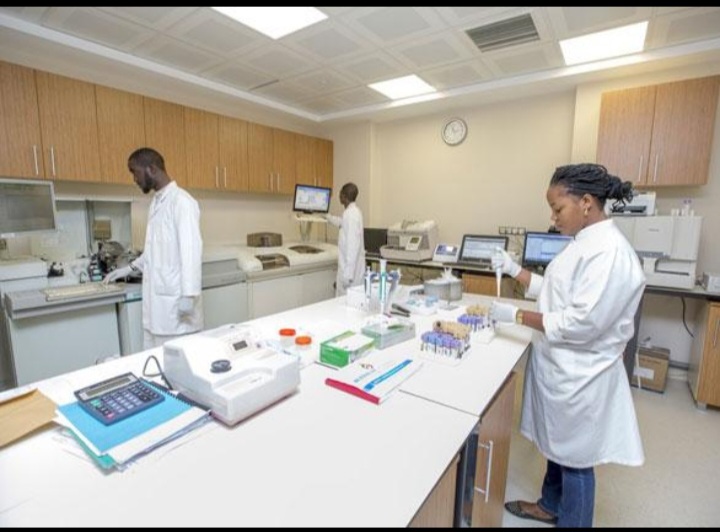
The Federal Government has renewed its push to strengthen the local production of medical diagnostic products as part of efforts to reduce Nigeria’s dependence on imports and improve the country’s health security. The Minister of State for Health and Social Welfare, Dr Iziaq Salako, said medical diagnostics should be treated as a strategic national asset…
Top 10 Richest People in Nigeria in 2026
Nigeria is home to some of Africa’s most powerful business figures, with fortunes built across cement, oil and gas, telecommunications, banking, manufacturing, investments and real estate. While Forbes’ 2026 Africa Billionaires ranking officially lists four Nigerians as billionaires, several other wealthy Nigerian business leaders have built fortunes worth hundreds of millions of dollars. Because many…
Tinubu Pushes AI and Fintech Cooperation as Nigeria Strengthens BRICS Ties
President Bola Ahmed Tinubu has called for deeper cooperation between Nigeria and BRICS countries in artificial intelligence, fintech, digital infrastructure and other emerging technologies as the country seeks to strengthen its position in the global digital economy. The President made the call in his address to the 18th BRICS Leaders’ Summit in New Delhi, India,…
SERAP Gives CBN Seven Days to Account for Alleged $6.23m Election Funds, ₦1.63tn
The Socio-Economic Rights and Accountability Project (SERAP) has given the Central Bank of Nigeria (CBN) seven days to account for millions of dollars and more than ₦1.63 trillion in public funds it says were allegedly diverted or remain unaccounted for. SERAP made the demand in a letter dated September 26 and addressed to CBN Governor…
INEC Raises Fresh Alarm Over AI-Generated Misinformation Ahead of 2027 Elections
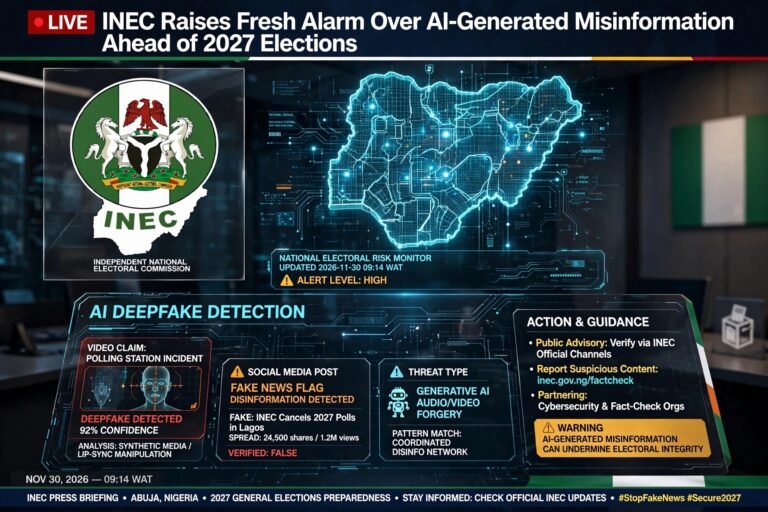
The Independent National Electoral Commission (INEC) has raised fresh concerns about the growing use of artificial intelligence to create and circulate misleading information ahead of Nigeria’s 2027 general elections. The electoral body said the increasing sophistication of artificial intelligence presents a new challenge for election communication, particularly with the ability to produce convincing fake videos,…
RCCG to Commission New Dialysis Centre at FMC Asaba
The Redeemed Christian Church of God (RCCG), through its Christian Social Responsibility arm, His Love Foundation, is set to commission a new dialysis centre at the Federal Medical Centre (FMC), Asaba, Delta State. The facility, named the Enoch and Folu Adeboye Dialysis Centre, is designed to expand access to specialised kidney care and strengthen the…