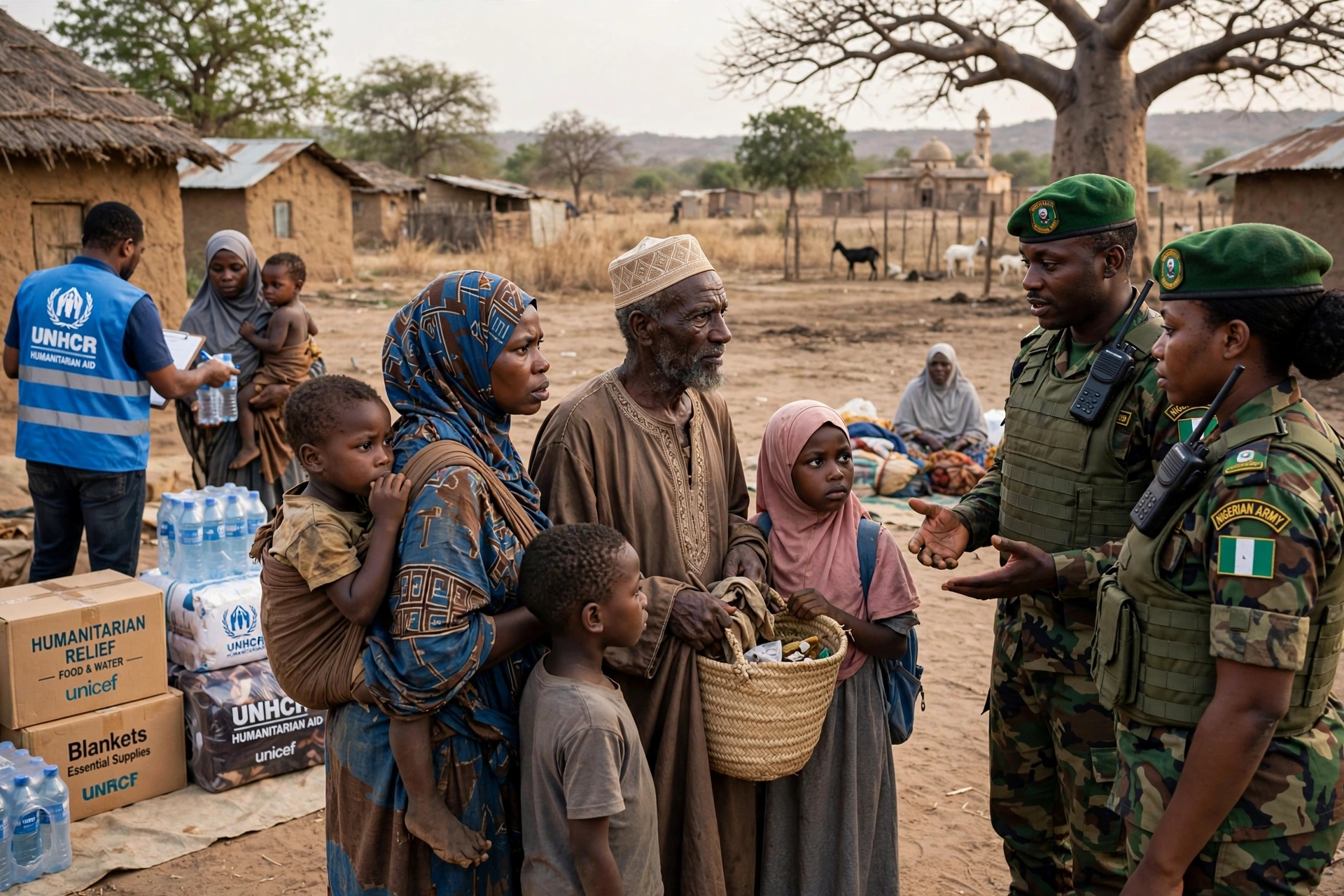
Security concerns in Zamfara State have again attracted attention following reports of attacks affecting communities and raising questions about the protection of civilians in the North-West. The state has faced prolonged security challenges involving armed groups, attacks on rural settlements, kidnappings and threats to travellers. Reports of fresh violence have renewed calls for stronger security operations, better protection for vulnerable communities and improved coordination among agencies responsible for maintaining public safety. However, details of the latest reported incidents, including locations, casualties and the circumstances surrounding the attacks, require confirmation from reliable sources. For residents of communities affected by armed violence, insecurity can disrupt daily activities and undermine livelihoods. Farmers may be unable to access their fields safely, traders can face difficulties transporting goods, and families may be forced to leave their homes in search of safer locations. When attacks occur repeatedly, the consequences can extend beyond immediate casualties to include disrupted education, reduced economic activity and increased pressure on neighbouring communities. Children and other vulnerable residents may face particular difficulties when displacement interrupts schooling and access to essential services. The Nigerian security agencies continue to face demands to protect communities from armed attacks and respond effectively to threats. Effective operations may involve intelligence gathering, coordinated patrols, protection of vulnerable routes and collaboration between security personnel and local communities. Residents also need accessible channels through which they can report threats without placing themselves at additional risk. Accurate information is essential during security incidents. Unverified casualty figures or claims about the identity of attackers can cause confusion and potentially increase tensions. Insecurity can create significant humanitarian challenges, particularly when families are displaced or lose access to farms and other sources of income. Displaced households may require temporary shelter, food, healthcare and assistance in returning to their communities when conditions become safe. Schools and health facilities can also be affected when insecurity makes it difficult for teachers, medical personnel and other workers to reach their workplaces. Addressing these consequences requires cooperation between government agencies, humanitarian organisations and local authorities. Although security operations are important, longer-term stability may also depend on addressing the conditions that make communities vulnerable to continued violence. These may include limited economic opportunities, weak public infrastructure, poor access to essential services and difficulties establishing effective local security arrangements. Community engagement can help authorities understand emerging threats and identify practical measures to improve civilian protection. Any long-term strategy must also ensure that residents can report crimes safely and that allegations of wrongdoing are investigated through appropriate legal processes. Further official information is needed to establish the full circumstances of the latest reported attacks in Zamfara State. Security agencies and relevant state authorities should provide accurate updates on confirmed incidents, the protection of affected communities and any measures being taken to prevent further violence. For residents, the immediate priority remains safety, access to essential services and the restoration of normal activities wherever conditions permit. The continuing security challenges demonstrate the importance of sustained efforts to protect civilians and restore confidence in affected communities.
Similar Posts
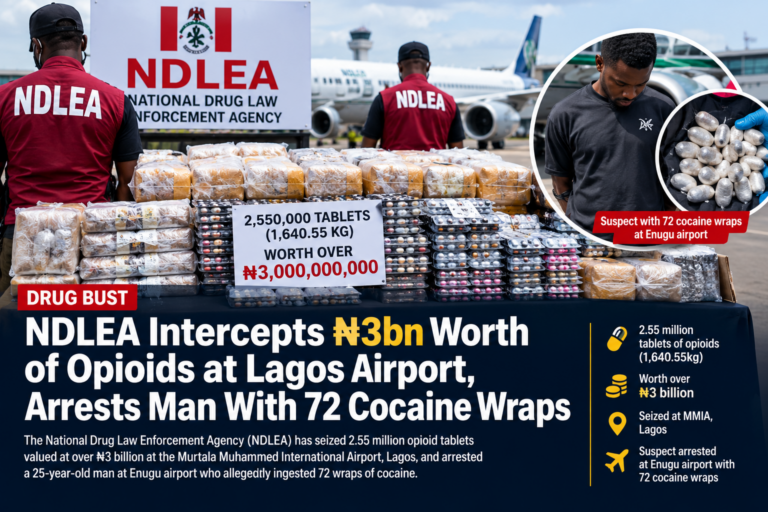
NDLEA Intercepts ₦3bn Worth of Opioids at Lagos Airport, Arrests Man With 72 Cocaine Wraps
The National Drug Law Enforcement Agency (NDLEA) has announced the interception of 2.55 million tablets of opioids valued at more than ₦3 billion at the Murtala Muhammed International Airport in Lagos. The agency said the drugs, weighing 1,640.55 kilogrammes, were seized on September 22 during the examination of three consignments at the airport’s import shed….
“NIGERIA’S PROBLEM IS POVERTY, NOT RELIGION” — SEYI MAKINDE URGES CHRISTIANS TO ENGAGE IN POLITICS
The Oyo State governor has called on Christians to participate more actively in politics, arguing that poverty and national development deserve greater attention than religious divisions. Oyo State Governor Seyi Makinde has urged Nigerians to look beyond religious differences and focus on the economic and social problems affecting the country. Makinde reportedly made the remarks…
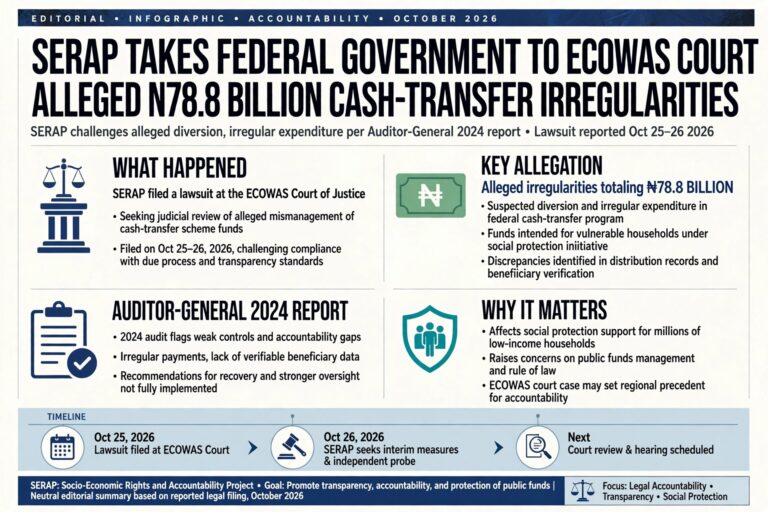
SERAP TAKES FEDERAL GOVERNMENT TO ECOWAS COURT OVER ALLEGED ₦78.8 Billion CASH-TRANSFER IRREGULARITIES
The Socio-Economic Rights and Accountability Project has taken the Federal Government to the ECOWAS Community Court of Justice over alleged financial irregularities involving more than ₦78.8 billion allocated to cash-transfer and social-protection programmes. The lawsuit, reported by Nigerian news outlets on October 25 and 26, 2026, concerns funds intended to support vulnerable households through government…
Samsung Expands Creator-Led TV Channels Across Global Markets
Samsung is expanding the international reach of creator-led television content as its free streaming service, Samsung TV Plus, adds new channels across several countries. The company announced the expansion on September 28, 2026, saying new creator-led channels are being introduced across markets including the United Kingdom, Australia, New Zealand, Singapore, Thailand and the Philippines. Existing…
Budget Minister Says Nigeria Needs Bigger Fiscal Capacity to Meet Development Goals
The Dangote Group says it generated approximately $17 billion in revenue during the first half of 2026 and is targeting about $36 billion in revenue for the full year. The figures were disclosed by the group’s Chief Strategy Officer, Aliyu Suleiman, during a media briefing at the Dangote Petroleum Refinery in Lagos. The briefing took…
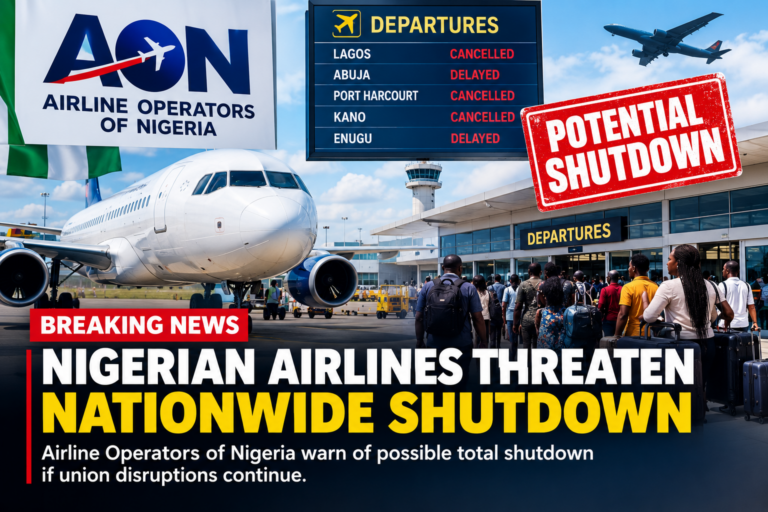
Nigerian Airlines Threaten Nationwide Shutdown Over Future Union Disruptions
Domestic airlines operating under the Airline Operators of Nigeria have warned that they could shut down their operations nationwide if aviation unions again disrupt the operations of any member airline. The warning follows the disruption of airline activities during an industrial action at airports in Lagos and Abuja on August 11. The Airline Operators of…